In 1966, I was fourteen, and in third year at secondary school. I was quite good at English, but I can’t say I much enjoyed it. Like all of the other subjects on the curriculum, for the majority of the teachers, it was a case of “This is what you have to do to pass the exam.”
The school was around six miles from the Cavern in Liverpool, but the Mersey Poets, “Rubber Soul” and “Revolver”, may as well have never existed. I never even realised two of The Searchers and one of the Fourmost were former pupils till much later on, and the poems of that other famous “Old Boy”, Roger McGough, were passed around furtively, like quasi-pornographic threats to the establishment – which of course they were.
At least that’s how the Irish Christian Brothers viewed the world – this teaching order, at the heart of the Irish Rebellion, transformed in England into agents of the British state as they whacked their Irish working class pupils into the kind of middle class aspirants who would make it to university and thus justify our parents’ and grandparents’ decisions to emigrate.
It’s a strange approach to education, though not hard to see that our parents believed they were giving us the best possible start in life, and it’s one that caused me to operate in a completely opposite manner when I later became a happy and committed teacher for forty years or so.
Most of my school friends would agree with that jaundiced summation of our experiences, but I have tended to seek a more nuanced view. There is no doubt that the school was a soulless exam factory, and though a minority of teachers were truly inspirational, many pupils were damaged in varying ways by what could, be, at best, a stressful schooling, and, at worst, a scary, violent, demoralising education, which, to be fair, was not unusual in the sixties.
However, I am minded to acknowledge that the education I received got me to success in qualifications and a career which I have loved. I also made lifelong friends there and developed the ambition to become a teacher, so there were positives which it would be churlish to deny.
One of those was a Scottish teacher, Ernie Spencer, whose approach to English teaching in my last couple of years at school, was a breath of fresh air (he would have hated that cliché) and, in introducing to me to the War Poets, transformed my approach to poetry.
However, he was pushing at a door which had been opened, a couple of years before by two guys from Newark, New Jersey and Queen’s, New York: Paul Simon and Art Garfunkel.
In 1966, the usual English class poetry would be from Tennyson or Keats, and novels would be from HG Wells, R.M. Ballantyne or John Buchan. It was tedious, eye bleeding stuff – more to be endured than enjoyed.
Of course, outside of school, we were enjoying listening to the Beatles and the Stones and the Beach Boys, but, at that stage, they were delivering a “sound” – and one which could be quite indistinct on our transistor radios or Dansette record players, and the power of the lyrics was diminished by the overall driving beat, or by their very simplicity.
There’s nothing wrong with simple lyrics, of course – and the many hits produced in the Brill Building, based on teenage love and heartache, have retained a kind of innocent joy and resonance down through the decades.
The top ten in January 1966 contained “Day Tripper/We can work it out” by the Beatles, “Tears” by Ken Dodd and “The Carnival is Over” by The Seekers. There’s some indication of attention to lyrics there, but the Fabs were still mostly about sound and overall effect, and the latter two followed in a long tradition of superficial “moon in June” middle of the road lyrics.
However, when “The Sounds of Silence” LP was released, fifty seven years ago this week, it was, to use present day parlance, a “game changer”. The production was crisp and the lyrics were easily as important as the music. In fact, when you stopped to listen – and increasingly we did – they were quite stunning.
The title track alone was full of lines which still resonate.
“Hello Darkness, my old friend” spoke to thousands of confused teenagers in lonely bedrooms trying to make sense of their lives. “Because a vision softly creeping, left its seeds while I was sleeping” was an image that even bored English students could access.
Then the song becomes cinematic: “narrow streets of cobblestone, ‘neath the halo of a streetlamp, I turned my collar to the cold and damp.” Impossible to hear those words without visualising the scene – from Humphrey Bogart to James Dean, and sensing the loneliness of adolescence, intensified by “my eyes were stabbed by the flash of a neon light”, an unwelcome and artificial intrusion.
The sense of alienation felt by so many adolescents, of being an outsider, is perfectly captured in “People talking without speaking, people hearing without listening, people writing songs that voices never shared. And no one dared disturb the sound of silence.”
“Silence like a cancer grows” is a message for the ages and another powerful piece of imagery, and we are back to that sense of being unable to communicate – in a beautiful painting of sound and vision: “But my words, like silent raindrops fell, And echoed in the wells of silence.”
One of the most prescient and visceral take downs of consumer madness is contained in “And the people bowed and prayed, to the neon god they made.”
And the final image can be filed under ‘once heard and seen, never forgotten’: “And the words of the prophets are written on the subway walls and tenement halls, and whispered in the sounds of silence.” I can still easily recall hearing those lines and understanding instantly – the answers are all around you if you only tale the time to look – which was a pretty seminal message for a fourteen year old.
Almost instantly, something clicked: this was how you could use words for effect, this was how imagery worked – to make an idea so powerful that you just had to imagine it.
No wonder then that when I heard Simon sing this at his Farewell Concert in Glasgow a few years ago, the tears flowed for the song that had meant so much to me as a fourteen year old.
The next track, “The Leaves that are Green” is more pop than folk, but still contains that appealing imagery of time passing, of which teenagers begin to gain an awareness as they look back and forward: “And the leaves that are green turn to brown, and they wither with the wind, and they crumble in your hand”. Love – the teenage obsession – is also deployed: “Once my heart was filled with the love of a girl, I held her close but she faded in the night, like a poem I meant to write.” It’s not difficult to imagine the Shakespeare of the sonnets and the Wordsworth of the nature poems producing these lines had they lived in the 1960s – and, of course, that was starting to open our minds to other forms of lyricism.
“Blessed”, with its biblical references, harmonies and jangling guitars could be described as “familiar” and then “Kathy’s Song” comes along to convince us further of the power of imagery: “I hear the drizzle of the rain, like a memory it falls” – an impressionist painting in words. “And from the shelter of my mind, through the window of my eyes” is a totally recognisable description of how we see the world, and the frustration of the teenager wanting to do so much but unable to do so is echoed in : “Writing songs I can’t believe, with words that tear and strain to rhyme,” as he missed his girlfriend who has remained in England as he returns to America. It would be a struggle to better the declaration of love: “I stand alone without beliefs, the only truth I know is you.”
We know that the girlfriend is Kathy Chitty, a girl from Essex, who was Simon’s muse when he was in England going round the folk clubs. She would appear again in one of his greatest songs “America”.
“Somewhere they can’t find me” is catchy pop and “Anji” is a folk club standard from Davey Graham – but here being introduced to a wider audience, and instilling in to many a desire to learn guitar.
The second side of the album starts with “Richard Corey” – more poetry – or at least a song based on a poem by Edwin Robinson, a nineteenth century American poet, and it is almost like the earlier songs have been preparing us for an actual poet as a follow on to poetic lyrics. Simon adopts a semi political stance, no doubt influenced by the songs from Greenwich Village at the time, and the lyric follows straightforward poetic scansion while managing to deliver lines of a style which were rare in “pop music” hits: “Born into society, a banker’s only child, he had everything a man could want, power, grace and style.”.
“A Most Peculiar Man” is classic Simon in that it combines the themes of loneliness and cinematic, almost documentary, description, reporting the suicide of a lonely man: “And Mrs Reardon said he had a brother somewhere, who should be notified soon” reflecting the anonymity of single life in a big city. The account of his loneliness was probably familiar to many teenagers who were not socially confident: “He lived, all alone, within a house, within a room, within himself.” The topic is huge, but the lyrics are simple and direct, especially the final sneer at the uncaring neighbours: “And everybody said ‘What a shame that he’s dead, but wasn’t he a most peculiar man.’”
You could almost believe that Simon and Garfunkel were leading us by the hand to accepting more formal poetry when you hear “April, Come she will”, a song that compares the changing of the seasons to a girl’s moods. There are lines that could be taken from the Romantic poets: “When streams are ripe and swelled with rain”, “In restless walks, she’ll prowl the night, July, she will fly, and give no warning to her flight”. It is easy to hear that this song, like “Anji”, and the later “Scarborough Fair”, is the result of the influence of the English folk clubs in which Simon had played and the style of singers like Martin Carthy and Bert Jansch.
“We’ve got a groovy thing going” was basically a tongue in cheek Everly Brothers pastiche to lighten the mood before the final song, again of loneliness and isolation, “I am a Rock”.
Although “The Sound of Silence” impressed us most creatively as fourteen year olds, it was undoubtedly this track which spoke to us most directly. It starts off softly and lyrically, with a guitar accompaniment: “A winter’s day, in a deep and dark December”, reminding us that alliteration was not a technique only employed by dead people! But then, with added instrumentation, the song slowly builds to a kind of frustrated yell at the world.
One of the conflicts of adolescence involves the need to be one of the group against the desire for privacy and individuality, and, more especially, the ability to choose when to be sociable and when to be lonesome. “I am a Rock” captures this conflict perfectly for teenagers.
It continues: “I am alone, gazing from my window, to the street below, on a freshly fallen, silent shroud of snow, I am a Rock, I am an Island.” These lines contain more than enough imagery, rhythm and rhyme to satisfy the most old fashioned of English teachers, but they are also defiant enough to take on the great poet John Donne, who famously wrote “No man is an island”.
But Simon is going in to bat for us disaffected teens.
When we have lost love or friendship, cannot get a girl or boyfriend, seek to be alone, we will not admit to being isolated. Our coping method will be to declare strongly that it is by choice – other folk are not ignoring or excluding me, I am choosing to be alone: “I’ve built walls, a fortress deep and mighty, that none may penetrate. I have no need of friendship, friendship causes pain, its laughter and its loving I disdain. I am a rock, I am an island.” You are not keeping me out, I am keeping you out. He is becoming angry, but not losing the lyricism or imagery.
Even more directly, he admits the reason for his anger: “If I never loved, I never would have cried” So that’s the answer, don’t risk the possibility of disappointment and heartache, be a rock that does not feel, and an island that cannot be reached.
He even goes on to push away any concern for him: “I have my books and my poetry to protect me, I am shielded in my armour, hiding in my room, safe within my womb, I touch no one and no one touches me. I am a rock, I am an island.”
No wonder we loved his words. He had put in lyrical form the great teenage shouts ”I am alright!” and “I don’t care!” – which, of course, mean the opposite.
And, just in case we have missed the point, he finishes with a strong emotional full stop:
“And a rock feels no pain. And an island never cries.”
He articulates an answer to that great adult-adolescent fault line:
“What have you got to be unhappy about?”
“Oh you just don’t understand.”
It is defiance – used as a coping mechanism and made lyrical.
He was giving us words to match our confused feelings, he was acknowledging how mixed up we felt, but he was also, more indirectly, pointing us towards the solace that can be brought by poetry and literature, the wonder of words, if you like.
And, all of a sudden, it became acceptable to like poetry, to have a go at writing it ourselves, to recognise that poets could be dead or alive, formal or free form in their writing, but could find the formula that would give articulation to our feelings and strength to our emotions. We could discuss lyrics, and, by extension, poems, it actually became a “cool” thing to do – and all the time we were honing our own communication skills, our creative abilities and our understanding of others and their feelings. We were learning to speak as well as talk, and listen as well as hear – to refer back to “The Sound of Silence”.
Later, “Homeward Bound”, written on Widnes railway station not twenty miles from our school, would underline the immediacy and reality of contemporary lyrics, while “America” would have us yearning for a journey across a country we had never visited.
Famously, producer Tom Wilson added the guitar, drum and organ arrangements to the title track and others without Simon and Garfunkel’s knowledge, and to their great displeasure, and it is true, to our ears, six decades later, some of the production sounds over wrought and clunky, but even that has its positive points.
This was still a time when a hit single sold an album and when the record labels were focussed on getting that top twenty radio hit, with an instantly recognisable “sound” and a “hook”. This was the reasoning behind Tom Wilson’s added production layer – to manufacture a hit record. It should be remembered that virtually all the tracks on “The Sounds of Silence” had been released by Paul Simon previously and sunk without trace in chart terms. What Wilson’s production did was to make the tracks “poppy” enough to attract radio attention and therefore increased sales. We may find the sound jars a little nowadays, but without that “pop” approach, we may never have been aware of these tracks. So it could be said that even the negatives about the recording turned out well in the end.
Emphatically, it is not an exaggeration to say that this album had a huge impact on my life – on how I saw literature, words, poetry, lyricism, imagery and all the magic techniques that would eventually become the tools of my trade as an English teacher.
More than that, of course, it opened the door to a whole developing genre of confessional singer songwriters: James Taylor, Joni Mitchell, Neil Young, Cat Stevens, Mary Chapin Carpenter, even down to Bruce Springsteen and Billy Joel – different styles but still producing lyrics which made you want to lie back, turn off the light and focus on the words and the pictures they painted. For long enough we had danced to the beat and thrilled to the sound, now we took in the words as well.
Paul Simon had opened a door for us and he would continue to usher us through it for the next fifty years – with or without Art Garfunkel, in myriad different styles and influences.
This album may have begun by introducing itself to Darkness as an old friend, but it finished by giving us the bright, light world of imagery and imagination, and an affection for the words which took us there.
To echo Roger McGough, late of our school: “Words? He could almost make them speak.”
Around twenty years ago, we first visited Cape Cod in Massachusetts. With its beaches and history, it is a prime place for a family holiday, especially if relaxation is high on your agenda.
On our first visit we stayed in the charming town of Falmouth, but when we returned two years later, we chose the town of Chatham, in the elbow of the Cape, where it reaches out into the Atlantic.
Without a car, it was not the easiest location to reach, but, during our stay there, our long walks and discoveries helped us fall in love with the place.
It met all the stock images of small town America for a visitor from Europe: the white picket fences around shingled wooden houses, the evenings at the Cape Cod Baseball league at Veterans Field, all the community hoopla of the Fourth of July parade. To us, it was like Disney without the saccharin. You would not have been surprised if Jimmy Stewart had been sitting with a coffee outside the Chatham Cookware, Doris Day had been serving in the Penny Candy Store, or Lauren Bacall choosing a summer dress in the Black Dog.
Then, in a local tourist brochure, I saw an advertisement for “Marion’s Pie Shop”.
Paradise just got even more perfect!
Everybody knows that Scotland is big on pies – mostly of the savoury variety, but not averse to fruit filled versions either. Discussions on the pastry created by various bakeries can fill whole evenings, and grown men salivate at the thought of pies enjoyed in bygone days.
So, as much as we already loved Chatham, the potential for pies took the place up another notch!
I had discussed pies with our cousins on Long Island, who fondly remembered my emigrant uncle’s Scottish based food choices, but, while they were comfortable with fruit pies and pumpkin pie, we struggled somewhat to describe our meat pies – even with emailed pictures and descriptions. Now, here we were in Chatham and there was a whole shop devoted to pies! Bring it on!
Luckily, the shop was based on Main Street. I was puzzled as to how I had not noticed it, normally having a fine nose for such establishments, but relieved we could walk to it and examine its products.
The address said: “2022 Main St, Chatham, on Route 28”.
More experienced American travellers would have noted that more carefully. In fact, I had a vague idea that America numbered houses differently – with reference to blocks as well as individual houses, so we set off confidently, expecting a short walk to the house of pies. “On Route 28” should have been another sign for caution.
Once we had passed through the roundabout (known there as a “Rotary”) we reached a stretch of Main St with various businesses. This looked promising. We carried on. The road was lined with more residential properties, but many were obviously used as offices for realty companies and the like. We kept walking. We passed the Chatham Highlander motel and noted how the area was becoming more rural, and after the Union Cemetery, the sidewalk was narrower and the buildings further apart. This was before the universal use of Google maps and smart phones, we headed onwards. Surely we would come to it soon?
I started to have some doubts. We liked walking, but had been on the road for over half an hour in maybe 90 degrees of heat – far above our comfort level in Scotland. Of course, we were also attracting some strange looks from passing motorists, and I realised we had seen nobody on foot since we passed through the Rotary – folk walk far less in the USA.
Finally, to the relief of wife and son, I stopped and suggested maybe our search for pies should be continued another day. When we turned back, we were outside the dentistry of Hamilton M Sporborg at 1118 Main St – a name still remembered in our household as the extremity of the Great Walk.
Sensibly, when we returned to Chatham two years later, we rented a car. This enabled us to stay at the wonderful Chatham Tides – an out of town, self catering beach front property, reached down the well named Pleasant St, passing such crossroads as Aunt Deborah’s Lane and Melody Lane.
It was a beautiful spot and gave us a number of fabulous holiday stays, but, crucially, it was around a five minute drive from Marion’s Pie Shop. Driving in to town, it was not the sign that first attracted my attention, but a small building with a limited parking lot and a queue of people outside the door.
“There it is!” I said. “On our way back, we are calling in to get our dinner!”
It turned out that our original pilgrimage had reached around half way from town to Marion’s, making a round trip on foot of about three miles in midday summer heat! At least we had had the sense to stop when we did.
Coming back out to the Tides, I was aware that I had perhaps, er, overbaked, my expectations of Marion’s, and I prepared myself for slight disappointment. I had never actually seen a savoury pie in the USA, the reality might well not match my hopes.
It remained busy with the parking lot full, and, as I approached the front door, I could see there was still a queue. I was also much taken by a friendly German Shepherd dog, who had to be living his best life at a Pie Shop!
When I finally entered the store, it was going like a fair. Two girls were working flat out in a tiny servery, and behind there was the hum of activity from the baking area. It was clearly a well organised procedure and some of the customers around me had pre-ordered or obviously had a regular order.
I stood and took in the menu and looked at the pies and cakes laid out on display. It was one of the few times in my life when I have actually stood with my mouth hanging open – literally as opposed to figuratively. The pies looked fantastic and the menu was overwhelming: there were chicken, beefsteak, hamburger, clam, seafood – in 6 or 9” sizes, and around two dozen kinds of fruit pies. I was aware that various cakes and cookies were also available but also that the queue was building and I had to come to a decision.
I chose the chicken, thanked the hard working staff profusely and wandered back to the car as if I had seen a vision.
It made for a wonderful meal back at the Tides, overlooking the bay, and it was delightful to discover that the anticipation had been worth it. Naturally, it was not the last visit to Marion’s and it remained a highlight of our Chatham holidays, which always featured car rental after that first experience!
I followed the Pie shop Facebook page and through the years discovered more about the business, and Cindy and Brad Stearns, the owners, and their ups and downs, triumphs and celebrations as a family. There was a warmth there which reflected the carefully made product and the pride shown in supplying townspeople and visitors alike.
Now, heading for a well deserved retirement, the family have put the business on the market. The hope is that it will continue in much the same way – a credit to the town and a beacon of high quality service. Started by Marion Matterson in 1947 – from her own kitchen, the business has become legendary in Chatham. Cindy reckons to have sold around half a million pies in the time she and Brad have been in charge – with around five thousand being sold each year around Thanksgiving. When you consider that Chatham is a town of around six thousand, rising to around thirty thousand over the summer, those figures are sharp indication of the popularity of the pies and other products.
As was obvious from the Facebook page, the legendary status of Marion’s is not limited to Cape Cod or even America. There are folk across the globe salivating at the thought of a chicken pot or seafood pie or a key lime or Strawberry Rhubarb dessert from 2022 Main Street.
I wish Cindy and Brad a long and happy retirement. It is to be hoped that they recognise a family bakery in Cape Cod has proved not only successful as a business but has also become a key part of the holidays enjoyed by so many down the years in Chatham.
To spread such happiness and goodwill through one’s work is indeed a blessing.
I am sure I speak for folk in many countries when I say thank you guys – you made a difference and you brought a lot of joy and satisfaction.
If only you could have done international shipping!!!
For cricket fans of a certain age, it can feel that the game has been walking briskly away from us in the past decade. Test cricket suffers from players more familiar with the shortened game, additional formats are created, based on a presumed lack of attention span on the part of players and spectators, and the thoughtful, classic mode of the game – the county championship four day event – has become an embarrassing uncle at a wedding, shunted off into a corner, and only grudgingly acknowledged for his long and lasting contribution to the family.
Of course, while fifty and twenty over games are quite capable of producing excitement and skill – though of a different order to previous incarnations of the game, much of the cerebral and reflective nature of cricket – to which it owes many of its unique qualities – is being hustled away in the commercial need for short and sharp action – for the “Amazon generation” who want it now rather than the drawn out joys of delayed gratification.
However, for those of us in Scotland and beyond who enjoy the finer points of the game, who like to identify familiar players from year to year, and chart the career progress of upcoming stars, following the Scottish national side has become something of a lifesaver.
It is true that the vast majority of their fixtures are played in the short form of the game – One Day Internationals or T20 competitions – but in many other respects, following Cricket Scotland provides much of the comfort of former times for the enthusiast.
These guys are playing for the love of the game – even those on full time professional contracts cannot make a living from the sport, and most make huge sacrifices to keep on appearing for the team. Inevitably, that breeds a familiarity and an affection between support and playing squad, and the game’s followers here fully appreciate the commitment necessary to perform to international standards in the world of associate cricket as currently constituted. So success is welcomed and celebrated with great vigour and emotion – and never more so than on June 10th 2018, when Scotland beat England in a One Day International at the Grange in Edinburgh.
Therefore, a book covering that historic event is very welcome to Scotland fans. However, “Playing with Teeth”, from Jake Perry and Gary Heatly, gains a more universal appeal by eschewing a tabloid approach to “The Big Moment” and, instead, thoughtfully and incisively, reflecting on the journey up to that point and, as its subtitle suggests, divining how Scotland “broke the cycle of glorious failure.” The authors’ approach is far more “County Championship” than “Vitality Blast” – and a far better read for that!
Cricket enthusiasts never knowingly turn down the opportunity to revel in statistics, but they will find them used intelligently to provide colour in this account of the five years that led up to the victory over the auld enemy – a predictably Scottish tale of optimism, despair, “almost but not quite”, and “coulda, woulda, shoulda”.
Both Jake and Gary are well kent figures on the Scottish cricket scene, and that knowledge and empathy, tempered with a good slice of analytical distancing, allows them to tell the tale with clarity, insight and revelation.
Thoughtful interviews with many of the major players – on and off the field – answer the questions upon which supporters have long pondered – what changed in the team’s approach, how was that change achieved, and which elements of that evolution became the drivers for ongoing success, and for the shedding of the “almost men” soubriquet?
To followers, the names of the players and coaches who are quoted are beyond familiar, but, given the sparse media coverage accorded to the associate game, it is fascinating to hear now their personal accounts of the changing approaches and how that impacted on them individually and on the team ultimately.
The developing roles and contrasting styles of the coaches – Peter Steindl, Grant Bradburn, Shane Burger, Andy Tennant, Toby Bailey and other backroom staff, is deservedly highlighted – and the incremental journey well detailed, even to the short term involvement of the influential Paul Collingwood and other specialists. It is particularly good to see the acknowledgement of the role played as player, captain, coach and leader by Craig Wright, whose inspiration in many areas is well covered, as are the captaincy roles of Preston Mommsen and Kyle Coetzer, and the wider contributions of senior players.
Representing Scotland against Test playing nations has always meant a uphill battle against lack of resources and limited media exposure. It is a journey which has been made by all who play for Cricket Scotland – away from the glare of publicity and with minimal attention. Jake and Gary use the words of staff and players to shine a light on that sometimes dark voyage.
In the end, however, we learn that the team decided to cease focussing on what they did not have, and to start maximising what they did have – a group of talented, strong willed and committed players, who, on their day, as a team, believed they were the equals of anybody. It was time, they decided, to start “Playing with Teeth”.
I remember coach Grant Bradburn saying in the press conference before that England game: “We’re going to beat England some time – why not on Sunday?”
It was a sentiment that thrilled me as a supporter and, thanks to this book, we now know, was redolent of the team’s mindset.
“Playing with teeth” is a fine account of “How we beat the English” in June 2018, but, beyond that, and more importantly, it is a grand tribute to all of those, on and off the field, who made that victory possible.
Cricket is perhaps at its best when it takes a measured approach and maximises style and ability, as did Cricket Scotland in the time leading up to that famous victory. In this “oral history” of “who, how, why, and when”, Jake and Gary have not let them down!
“Don’t use the front door, come round the side. Keep those mucky shoes off my good carpets!”
It was an unusual National Trust welcome, but it brought back distant memories of everyday life in the sixties, when money was scarce, and carpets expensive, and only to be cleaned by the application of elbow grease. Less than two decades after the end of World War Two, the “make do and mend” tradition was still generally promoted by our parents’ generation. All possessions had to be treated carefully and with respect and be “made to last”.
So the welcome resonated – especially as we approached “Mendips”, the middle class Liverpool home of the young John Lennon and his Aunt Mimi, who brought him up through most of his childhood. Mimi was undoubtedly houseproud, as well as socially aspirant, and that greeting would certainly have assailed the ears of John’s two council estate chums, Paul and George, when they came round to practise their skiffle.
We were with my oldest school friend – friends since September 1963, when the Beatles surge to fame was under way, so it felt appropriate. As an only child, I lack the siblings who can share earliest childhood memories, so school friends become that bit more important.
“Mendips” – Photo S McPartlin
Of course, touring the childhood home of a Beatle was always going to be emotional and insightful, but, like The Beatles themselves, you can’t help wondering if the tour is as much about us as them.
We go in through the tiny porch at the side of the house – an extension built by Mimi’s husband, George, to make the kitchen seem more spacious. Our “mucky shoes” step on to tiles – hard wearing and easily cleaned, and, like linoleum, common in kitchens and bathrooms in these times.
It is at one surprising and redolent to see the sparseness of the kitchen –no need for expansive storage with fresh food bought every day for each meal, the basic sink and draining board, virtually no “white goods”, a reminder of the hard graft that went into “keeping house” in those days.
The National Trust have done a good job of reinstating many of the original features in the house and installing fittings and furnishings contemporary to the early 1960s, so there is a good sense of how it would have been when John lived here.
Next door, a tiny room with a small table in the window – a place for the young Lennon to be alone, occasionally doing homework, more often busy with his drawings and scribblings in his own secret code so Mimi would not understand: the basis for his later writings and art. Outside in the early days were just fields and countryside, no doubt an inspiration to the art obsessed teenager.
As we go through the house, there is a strong sense of the inter-war rise of the middle classes – the lounge, the dining room – and that front porch, reserved for the entry of “those and such as those”, but providing a fine, closed off, echo chamber on the rare occasions when John and his skiffle mates were allowed to practise at “Mendips”.
Front porch. Photo: National Trust
The lounge has a cluttered feeling, familiar from our childhoods, with heavy furniture and dark colours – a room to display “good taste”.
However, after Mimi’s husband, George, died, suddenly and fairly young, she was left with a financial struggle to keep up appearances and raise the young Lennon in a manner which she considered appropriate.
The answer lay in taking in student lodgers, which she may have hoped was a double win. Clearly, the rental income would be invaluable, but Mimi would certainly have hoped that the presence of “academia” in the house would have impressed John into the need for study and qualifications. These were the days when students were largely earnest young men in blazers and stripey scarves, their horn rimmed glasses often focussed on their books. Surely the perfect role models for John?
We see the dining room with its large central table – a study room for the lodgers, and their double bedroom up the stairs, but John’s reaction is less clear.
He failed to achieve a single o-level – skiffle and art having claimed him, as well as the psychological trauma of his mother’s death when he was seventeen. However, Mimi’s fall back position – gaining him a place at Liverpool Art College – and his willingness to attend, suggest that, despite his later protests, Lennon was perhaps not quite so “unteachable” as might be thought.
Whatever the case, we all benefitted when John adopted the bohemian lifestyle of the art college and his later fascination with Stuart Sutcliffe and Astrid Kirscherr – all fuel to his developing creative output.
His small single bedroom at the top of the stairs was a reminder of teenage years, when returning after a night in the pub, the trick was to get all the way up the stairs and into your room without the living room door opening to reveal an inquisitor parent who would, without doubt, assess the state of your sobriety.
Before central heating, this room would have been chilly in winter, but there is something ineffably moving to stare at the bed and imagine John and Paul sat hunched together on it, trying to work out the chords of skiffle hits or their own tunes on their first basic guitars.
The iconic story of this room is told by the guide: “Recently Bob Dylan came on the tour incognito, though someone surely should have recognised the Robert Zimmerman name on the booking. Only when they got to this room did he identify himself and ask the guide if he could have a moment alone in John’s bedroom. The guide stepped outside and closed the door, and a few moments later heard Dylan tuning John’s guitar.”
John’s bedroom, Dylan’s moment Photo: National Trust
Upstairs is completed by Mimi and the students’ bedrooms and the bathroom. To maximise income, the students had the double bedroom while Mimi slept in a smaller room – another sacrifice she was willing to make to her aspirations and to ensure a suitable home for John.
It must have been a comfortable house – far from the cramped chaos of the terraced two up two down terraces so familiar about Liverpool, but it was suburban rather than upper class and as we leave I can’t help but revise my long held opinion of Mimi as little more than a snob. Aspirational she may have been, but she also provided John with a kind of stability which might otherwise have been lacking, and maybe that helped give him the confidence to perform and write, albeit in the face of his many insecurities. I think Mimi did her best, in light of the times she lived through.
As we leave “Mendips”, I reflect on the power of space and location and the ability to imagine the young John before he was a Beatle, living a life in surroundings not dissimilar to mine a decade later.
“Mendips” Photo: S McPartlin
And one more surprise awaits me.
At the gate, the guide points up the road to a spot at a junction with Vale Road – about fifty yards away: “And that’s where John’s mother, Julia, was killed.”
I admit that the death of Julia has not really been a major part of my Beatle lore, other than knowing she was run over near to Mimi’s house. I had never realised how close to “Mendips” the accident occurred, and standing on the pavement looking across Menlove Avenue, it suddenly seemed very real as the guide explained what had happened.
Menlove Avenue – junction by the tree in the centre, bus stop just behind. Photo: S McPartlin
“It was mid July 1958 and Julia had been for tea and chat with Mimi. As she stood at the gate saying goodbye to Mimi and one of her student lodgers, John’s pal, Nigel Walley, came up, only to discover that John was actually at Julia’s house at Blomfield Rd. Julia joked that Nigel could “escort” her to the bus stop and they walked up to the corner of Vale Rd where he lived. The bus stop was, and still is, diagonally across the road from where they parted. The central part of what is now a dual carriageway was occupied by tram tracks in 1958, with low hedges between roadway and tracks. Focussing on the bus stop and not missing her bus, Julia seems to have cut through the hedge and into the path of a Standard Vanguard being driven by an off duty police officer, Eric Clague. Though he was an unaccompanied learner driver, it seems the fault was Julia’s, as she crossed without looking. Nigel heard the crash, saw what had happened, and went to get Mimi who rushed to her sister and became hysterical. There was nothing to be done.”
Even after sixty odd years it is strangely resonant to stand on the spot and hear the details. Such a nondescript traffic accident, such a major impact on a family and a future cultural icon.
Mimi always blamed the driver of the car, perhaps understandably, but it is easy to reconstruct the reality. Though mid July, it is after 9.30pm so well into twilight. Traffic was far lighter in those days so crossing roads without looking too carefully was much more common. Through the tram wires and lampposts, Julia may well have seen the double decker bus coming in the distance but failed to notice the lower down, small Vanguard. From Clague’s point of view, he would have been driving along a quiet road, late in the evening when a woman suddenly appeared out of the hedge. We are told he was not driving at speed and he certainly tried to brake.
Menlove Ave tram tracks, from area of accident, showing low hedges at tram tacks. Photo: Liverpool Echo
Nigel Walley felt some guilt in the aftermath – an almost inevitable: “If we had talked for another minute – or a minute less, would the accident have been prevented?” He wondered if John in some way blamed him for what happened.
Later, Eric Clague would leave the police and become a postman. On his round he would deliver increasing bundles of fan mail to 20 Forthlin Rd, the home of Paul McCartney, and our next destination.
It hits a sombre note as we climb back into the minibus to travel to Paul’s childhood home.
When we are young, the world seems huge but our own world within it is small, and that was especially true for youngsters in the late 1950s.. It is little over a mile across the golf course from Lennon’s home to McCartney’s. Even in the minibus it takes less than ten minutes and we pass St Peter’s Woolton, where John and Paul were introduced to each other at the Fete, and Allerton Cemetery where Julia is buried. At “Mendips” we saw how Strawberry Fields was only a short distance away and now we pass the chip shop where Paul remembers first being aware of the rumbustious John in a queue, long before they were introduced.
Time to reflect: imagine if that had been their only interaction.
Then we overtake a No 86 bus at a bus stop and the guide reminds us – that’s the bus and the stop in
“Made the bus in seconds flat. Found my way upstairs and had a smoke And somebody spoke and I went into a dream..”
Though close in actual distance, there is a far bigger gap in status between “Mendips” and 20 Forthlin Avenue where Paul lived, and that is immediately obvious as we turn into the road.
This was part of the Mather Ave council estate, built at the start of the fifties, as part of Liverpool’s attempt to recover from the war time blitz and inner city slum properties. In her own way, Mary McCartney – Paul’s mother, was as aspirant as John’s aunt Mimi – but whereas Mimi was much concerned with middle class appearances, Paul’s mother was more concerned with working class respectability – an interesting contrast to the often perceived backgrounds of the songwriting pair. The McCartneys had progressed from a prefab in Knowsley to a council house in Speke and now to a desirable Allerton home which was only three or four years old when they moved in.
The houses on this estate had been designed with care and were built with quality and functionality, with gardens front and back and, at last, indoor toilets. Number 20 is part of a mid terrace and still retains the original neat appearance.
20 Forthlin Rd. Photo: S McPartlin
The visit experience, as well as the house itself, differs from that at “Mendips”.
Whilst John’s house was run by a very private woman, intent on appearances and very self aware, for most of Paul’s time in Forthlin Rd, it was a male household – Paul, his brother Mike and their widower father, Jim, and, as Mike was an early photography addict, their life there is far better documented – in words and pictures, and it is clear that it was a happy and warm home. That’s not to say that Jim was not principled in his parenting – he certainly valued education for his lads, but as a former musician, he was perhaps possessed of a creative warmth that Mimi may have lacked.
We go round the back first, into a small garden that still has the original coal shed and the borders which were well tended by Jim. A deck chair is set out and the boys remember their dad sat there completing crosswords, getting them to help, establishing their love of words at an early stage.
Back garden of Forthlin Rd. The deck chair where Jim would do his crosswords, and the drainpipe leading up to the bathroom window Photo: S McPartlin
The National Trust have restored both houses to the state of furnishing and arrangements as they would have been when John and Paul lived in them, but Forthlin Rd has the added advantage of Mike’s original photographs – so we see Jim doing his washing at the big Belfast sink in the basic kitchen, or in that deck chair with a crossword, a young Paul looking over his shoulder. Then there’s John at the cooker, kettle boiled, about to make a cup of tea as Paul looks on. Mike was well into experimenting with his photography, and there’s an early picture of John, Paul and George standing outside at the back of the house.
Favourite for me, perhaps, is the picture of John and Paul in the tiny dining room, sitting on the couch, guitars in hand, against the fireplace, working on a number. It was in this room they completed “She Loves You” – and having done so, went through next door to the “parlour” to play it to Jim. He thought it was good but suggested the Americanised “Yeh yeh yeh” would be better as “Yes Yes Yes”.
The Dining Room where “She Loves You’ was completed, John and Paul sat together on the sofa by the fire Photo: National Trust
I stand in the dining room transfixed by memories. “She loves you” was number one when I started secondary school and first met the friend standing next to me. And now it’s almost sixty years later!
In the parlour is an upright piano. Paul’s mother rather disapproved of all the Irish relatives coming round and having a sing song around it, but after her death, when Paul was thirteen, it became a regular event, no doubt lightening the load Jim had to carry. Listening to early Beatles songs now, it is clear that Paul’s exposure to his dad playing all the popular show tunes of the fifties – from Rodgers and Hammerstein and the like, had a great influence on their tunes and lyrics, which, when overlaid with their rhythm and blues influences, instigated that innovative sound.
The parlour and its upright piano, scene of family sing songs. Photo: National Trust
Upstairs, and Paul’s bedroom is an echo of John’s – small and functional, and with that single bed on which he must have sat for hours, mastering chords and trying out lyrics. It may well have been here he wrote “When I’m sixty four” – when he was fourteen.
Whereas on their rare visits to “Mendips”, the Quarrymen were often relegated to the front porch to play, at Forthlin Rd, the lads had the use of the dining room and, as so many burgeoning musicians would do over the years, they would sometimes play in the bathroom to gain the echo effect off the tiles.
Out in the back garden again for the end of our visit, the guide points out the drainpipe by the back door. “When Paul was late home, Jim would lock the door, and Paul would climb up the drain pipe and come in through the bathroom window.”
So we were looking at another song inspiration!
Paul and Mike McCartney are always insistent that visitors to the house should know it was a happy home and indeed we are played recordings from them welcoming us on our visit and emphasising the fact, but I found a rather melancholy atmosphere there, as if Mary’s early death had cast a shadow over the home that could never entirely be displaced by the closeness of Jim and his two sons.
My mother’s childhood friend, Frank Danher, was a cousin of Paul’s mother (and bizarrely was later the parish priest of my school friend who is alongside me today). He would tell my mother that he worried for Jim and the boys and would visit them, attempting to offer support. It was a story repeated amongst the wider McCartney, Mohin and Danher families who all “rallied round”. In the fifties, I suppose, a man was considered incapable of bringing up a family alone. But it has to be said that Jim does not seem to have done too badly!
I had expected to be fascinated by seeing the homes where Lennon and McCartney grew up – I was less prepared for the insight into their particular dynamic and the influences which contributed to the partnership.
They both lost mothers when they were teenagers, but the impact played out differently for them.
Coming as it did against a background of childhood instability, and at a time when John was just establishing a kind of relationship with Julia, her death was probably the driving force behind much of his future troubled personality. It was often mentioned that he had the fear that he would lose anyone he loved.
For Paul, a happy family unit was suddenly no more when his mother died, and there is an irony in her career as a midwife and health visitor who brought and preserved life in others. As a Beatle, Paul was, perhaps, the one who always sought to please, had a well developed awareness of others needs, and often verged on the edge of sentimentality. It is not difficult to link those traits to the loss of a much loved mother whom he would always seek to make proud – and to the closeness with his dad and brother.
John’s development of a slightly depressive, prickly persona was his way of defending himself against the pain caused by the loss of Julia, as he wrote indeed: “You had me but I never had you.” One might claim he was in denial for much of his life.
Brought together by an equal loss, sparked into creativity by their conflicting reactions to that loss, both understanding and not understanding their partner’s state of mind – no wonder the energy produced brought forth such prodigious talent.
I have to admit to being both moved and excited by our visits to these two houses. It seemed they reflected the best of the Beatles’ work – familiar but revelatory, challenging but comforting, similar but different.
The original title of “A Hard Day’s Night” was “Eight Arms to Hold you” – and visiting these houses echoed the idea that the Beatles held us – through their talent and familiarity, their ordinariness and their remarkable uniqueness. It was a conundrum based on how they made us feel and how we made them feel.
I’m left with John’s words from “I am the Walrus” – who knows, maybe part of his scribbles at that small table in the room next to the kitchen in “Mendips”:
“I am he as you are he as you are me And we are all together”.
For my generation, as expected, the release of Peter Jackson’s “Get Back” trilogy, reworked from the Beatles’ “Let it Be” footage, has been emotional. And why not – as it harks back to an important element of our childhood days? However, the films have also served as a reminder of the way we were.
I have always counted myself blessed that the “Beatle Years” – 1963-1970 – coincided exactly with my years at secondary school. It meant that I followed their journey to global fame from being a wide eyed 11 year old fan to a music obsessed student – and enjoyed them through the changing emotions that accompanied my teenage years.
By chance, I was also living around twenty miles north of Liverpool at the time, and attended a school a few miles from the Cavern, though I had no awareness that the location would have seemed wonderful to millions of Beatle fans around the world.
Retrospectively, in age and locality, I was afforded a good vantage point – close by, but not so immersed as to obscure a wider view of the whole phenomenon.
My cousin was five years older than me and lived in Liverpool itself, so she was of an age to be a regular at the Cavern and even went out with a drummer from one of the Merseybeat groups for a time. Her perspective, in age and place, would have been different to mine.
Watching the films, the first thing I remembered was that, almost invariably, until 1970, we would see the Beatles as a foursome, and seldom as imdividuals, and, of course, this footage returns us to that experience. It helps us recall the surprise when it was announced that John would appear in “How I won the War” and Ringo in “The Magic Christian”. Even McCartney’s involvement in the music for the Boulting Brothers’ film “The Family Way”, and George’s fascination with Indian mysticism and music, was a departure from that “group thing” to which we had become accustomed.
In the years since, we have come to think of them individually – Paul as the chat show guest, Ringo with his peace and love gestures, and, sadly, the deaths of John and of George. These films remind us that a large part of the Beatles original appeal was the interaction between them,
And that, in itself, is interesting to recall.
Before the Beatles, “pop stars”, male or female, were generally solo artists. Even if they had a band, they continued the old bandmaster tradition, being styled as “Buddy Holly and the Crickets” or “Cliff Richard and the Shadows”. The members of the backing group were largely anonymous. In the Shadows, for instance, probably the most popular group before the Beatles, fans may have been able to name Hank Marvin because of the glasses and twangy guitar, but Bruce Welch, Tony Meehan and Jet Harris would have been far less visible.
One of the elements that contributed to the Beatles success was Brian Epstein’s recognition that he could market them as individuals as well as promoting a strong group identity. They soon established almost cartoon personae: Paul as the self aware charmer with his boyish grin and cheery thumbs up; Lennon the cynical, his short sighted leer at the camera often seen as truculence; George the shy guitarist, lop sided smile at the ready; and Ringo – nearly always called “loveable”, head on one side as the mop top flopped and he grinned at his good fortune. When we think of them back then, it is almost always in those poses, and, to be fair, Jackson’s films do little to eradicate these images.
Even the press began referring to them as “John, Paul, George and Ringo”, and everybody, fan or otherwise, was soon able to identify each of them – but they seldom appeared in public as individuals. Ringo’s solitary walk in “A Hard Day’s Night” is partly memorable because he is not with the others. The group’s excited breakout from the studio to the sounds of “Can’t buy me love” in the same film is reminiscent of the Marx Brothers – not merely because of the madcap antics, but also, like the comic trio, they are operating as a familiar unit and interacting with each other.
As fans we were encouraged to buy into this “one for all” image – none more so than in the film “Help”, when the lads enter four neighbouring terraced houses whose interiors are revealed to be one big communal living area. Consciously or otherwise, Beatles fans liked to imagine them actually living like that – individually – but together. It must have been an irksome image for them at the time – a fact partially reflected in some of the interchanges in “Get Back” and more so in the original “Let it Be” release.
So for original fans there is some comfort to be had in watching the interactions in “Get Back” and recognising that the success of the original “cartoon personae” was that they were largely based on how they actually were. In those relatively unsophisticated times, it’s hard to see how totally false images could have been maintained, and I suppose we were always aware that the demands Epstein put in place to gain them stardom were never completely followed – there was always a tie unfastened, a jacket removed, a haircut missed. It explains how the Beatles could switch from their Hamburg leathers to smart suits – and from pill popping anarchy to bowing in unison at the end of each number – in the pursuit of fame, but also how their deal with Epstein was always knowing, and never one of complete subjugation – as McCartney suggests in “Get Back” when he wonders if they miss a “father figure like Mr Epstein” to get them organised.
Over the decades I have often struggled to capture in words the particular excitement associated with the Beatles that we felt back in the sixties. The forthcoming release of a new single, an appearance on television, the arrival of the fan club magazine or its special Christmas record, the scenes from airports and concert halls wherever they went – all of this felt like Christmas morning – the anticipation and the joy of a new song, the next appearance, or even a different outfit.
Naturally, part of this was related to our age and the times in which we lived. Celebrity, of all kinds, was nowhere near as universal as it is today. Pictures and pieces about the Beatles were many, but quite controlled – and fans would have little idea of what they were doing when not in the public eye. So the publicity we did see – from grainy grey and white newspaper pictures, through glossy fan magazine shots, to the covers and sleeve notes on LPs, were gone through again and again, committed to memory and quoted to pals repeatedly.
We studied them as well, knew every facial and verbal tic, their different takes on how they wore their clothes, how they smiled or frowned, the way they walked. Young people had far fewer entertainment distractions in those days and so the scrutiny was intense.
And reliving that while watching “Get Back”, I found myself thinking again about that original excitement: the stomach churn at the sound of the drum roll that started “She Loves You”, the quickening of the pulse during the feedback introduction to “I Feel Fine”, the intake of breath on hearing the chord for “A Hard Day’s Night”, the involuntary movements caused by the opening bars of “Baby you can drive my car”, or the surge of happiness as the harmonica led into “I shoulda known better”. Many of these moments remain as distinct childhood memories.
How to describe it effectively and with resonance?
It strikes me now that those feelings had all the ingredients of “first love” – that childhood crush on someone who was unreachable, probably unknown to you, and almost certainly unconscious of your existence. Ridiculously, you felt you knew everything about them, and just the mention of them would bring a red face, a quickening heartbeat, a launch into projected fantasies of a relationship that would never be reality. The nervous ignorance of actual adult relationships was submerged in a dreamland which created a one dimensional view of the object of the affections, an impossible world in which they would be completely as you wished them to be – in essence an extension of yourself.
Both sexes could buy into this.
For girls, there was the future boyfriend they imagined – with John, Paul, George, or Ringo fitting preconceived stereotypes of the kind promoted by teenage magazines: Paul would be lovely and romantic, John would be dangerous and exciting, George would be friendly and non-threatening, and Ringo – well, they would just want to mother him. There was something for every girl there – particularly in pre-pubescent years where relationships seemed simple and straightforward. Psychologists tell us that the hysteria amongst girls at Beatles concerts was far more based on sexuality than this simple view – but, if that is true, given the times we were living in, I suspect a lot of that would be subconscious.
The attraction for boys was also based on the personalities we thought we saw, or knew, in the group. You could be soft and gentle like Paul, edgy and hard bitten like John, quiet and mysterious like George, or a bit more mature and sensible like Ringo. Teenage boys love to play a part, and we chose our roles, and often, publicly, or not, identified ourselves and each of our friends with one or more of these traits. And they could also fulfil the place of big brother, little brother, or mate.
There is also a suggestion, which is subconsciously present in “Get Back”, that the members of the group actually represented different parts of our own personalities – which would make them a kind of four headed hydra. This popular technique in literature and drama was very current in the early 1960s – “The Likely Lads” on BBC presenting Bob and Terry as two parts of the same character in conflict – the upwardly striving, under confident, Bob, and the superficially arrogant, but inferiority cursed, Terry – as two sides of our nature; or the Steptoes – Harold’s grandiose ambition stymied by the cold reality of his father’s defeatism. I suspect we all had times when we felt like each of the Beatles in turn in the way we handled the world – a reflection of the confusion of the teenage years of growth and development.
This identification with the members of the band was made possible by Epstein’s decision to promote them as individuals while emphasising the importance of them all being in the group. The great “what if” of their story, of course, is how their manager could have “managed’ them as they matured and forged stronger individual roles – as musicians, but also as partners and parents. Maybe the looming difficulty of this scenario contributed to Epstein’s increasing depression.
The other big reminder I took from “Get Back” was the realisation of how much the 1960s were a time of “permission” – for us as youngsters, but also across society. The tabloid memory of “the sixties” would see them as times of freedom, rebellion, and creative innovation. For some, it was, but for the huge majority, it was a very slow emergence from post war repression.
Politicians were still very much patrician in their approach to government, and it took the Profumo scandal to suggest to the public that maybe they were not as trustworthy as they appeared.
As children, we went to school, did our homework, were told how long our hair could be and how to wear our uniforms. At home, had to ask permission to go out, were quizzed as to where we were going and with whom, told when to be back, and even wore clothes either bought or sanctioned by our parents.
This is maybe not surprising in an era when the idea of children having “rights” would be, and often was, openly ridiculed.
Perhaps this was nowhere more obvious than in the area of entertainment.
This aura of “control” was certainly part philosophical and based on the inherited image parents had of family life, but it was also practical.
The early sixties were a time when most families had no central heating, meaning the living room, with its coal fire, was likely to be the only warm room in the house. This, as much as any family feeling, tended to keep everyone together in the same place. In this room would be the one and only television set, with its two channels, and also, possibly, the family “radiogram” – with a radio, a record turntable, a space for a dozen LPs, and flowers, ornaments and a bowl of fruit on the top – much more a piece of furniture than an entertainment centre.
This led to much negotiation – generally with the father as “head of the house” – as to what could be watched on television, what could be played on the radio or gramophone, and when it could be played, and decisions on who had first choice in all these areas. My generation have fixed memories of “family watching” of shows like “Dr Finlay’s Casebook”, “Dr Kildare”, Perry Mason” and “No Hiding Place” which would have been considered acceptable family viewing, though not perhaps the first choice of teenagers. It did provide a shared experience and topics for family discussion, however.
Later, with the emergence of “Z Cars”, “Coronation St” and “The Wednesday Play”, and “Monty Python”, discussions became more complex, especially when there was a range of ages within the family. “Can I watch?” was a familiar question, as was “Can I put this record on the gramophone?” The likelihood of permission was based on family relationships, timings of the request, or content of the television programme or record. In the early years of the decade, “dad going out” was often a sign for an explosion of record playing or television choices!
These limitations would slowly change. The coming of the transistor radio and the pirate radio stations, as well as improved domestic heating options, made it more feasible for teenagers to retreat to their bedrooms to listen to what was already known as “their music”, and the explosion in record sales, allied to more accessible record players, added to this.
But, in the early days, the Beatles benefited from their “universal” appeal, and, while part of this reflected Epstein’s image making, a lot of it was to do with their music and its roots.
Much has been written about their R & B preferences and the style of music they played in Hamburg – influenced by rare records brought into the port of Liverpool by American sailors. This was a feature of Liverpool life at the time, and most of the local groups played a similar set.
However, what set the Beatles aside perhaps was the eclectic nature of their song book – even before they gained the confidence to use their self written material. Their first two albums reflect this broad influence – the Miracles’ “You really got a hold on me” alongside “Till there was You” from the stage musical The Music Man”; the Brill Building’s Goffin and King’s “Chains” sharing LP space with “A Taste of Honey” – originally the theme to the Broadway version of Shelagh Delaney’s play of the same name.
Even in odd moments during “Get Back”, they will still break into a scat version of a well known musical standards.
The truth is that the Beatles, like most of their generation, had grown up aware of the great stage musicals – such as Oklahoma, Carousel, My Fair Lady, and South Pacific, and their early music and lyrics demonstrate this fact. The aftermath of the swing era, and even music hall, was still resonant, especially in the McCartney household, as Paul’s words and music often reflected. “Maxwell’s Silver Hammer”, “When I’m Sixty Four” and “Yellow Submarine” would all demonstrate this musical background.
Basically, they were writing songs and lyrics that our parents’ generation could appreciate – which was a departure for teenage music. In Beatles songs, the older generation heard tunes and words which they understood – in contrast to the “Bee Bop a Lula” rock and roll of Elvis, Gene Vincent and Little Richard – which the adults would generally refer to as “just noise”, and which they found rather threatening.
The Beatles songs, by contrast, were often easy on the ear with catchy tunes and relatable lyrics – and the fact they were sung in a familiar if regional accent, rather than the fake American of other rock and rollers and skiffle devotees, also helped make them accessible to our parents, in the early days at least. So, consciously or otherwise, the Beatles song book broke down at least some of the domestic generational barriers when it came to watching them on television or begging use of the gramophone. This “cross over” appeal greatly enhanced and widened their popularity, and, secretly, we were impressed by the fact that “even our parents” liked them.
Of course, while Epstein sought to present his “boys” as every mother’s favourite son, and the boyfriend each father hoped his daughter would bring home, The Rolling Stones’ manager, Andrew Loog Oldham, aimed to make his group appear as the opposite – dangerous, subversive and, as the right wing press would have it, “dirty”.
Naturally, the idea was that the (relatively) neat and tidy Beatles would appeal to younger teenagers with the “permission” of their parents, who were also quite taken by their image, and the Stones – portrayed as dangerous, scruffy, and rude, would appeal to the older teenagers – desperate to rebel against their parents and the establishment.
Even though celebrity image making was stil recovering from the ongoing demolition of the old Hollywood studio “star” system, it was able to function successfully up to a point. The truth of the matter was rather more complex, especially in an era where class background was considered important.
The Stones, as we have come to realise, were far more middle class than the Beatles – Jagger’s practised sneer hardly disguising his Grammar School and LSE education, Brian Jones a product of Cheltenham Grammar School for Boys, Keith Richard a boys’ choir soprano and art school student.
The Beatles had a more mixed background, although their families were largely middle class aspirant – James McCartney bringing up his son to value the arts, listen to music, with a piano in the house, and to be polite and thoughtful as his late mother would have wished, George’s Speke council house upbringing was marked by his mother Louise who was active in the local Catholic church and expected her son to work hard. Ringo came from the working class Dingle, his step dad a great swing music lover, his mother, Elsie, over protective after his many childhood illnesses, which minimised his education.
Most notable, perhaps, was the attitude of John’s Aunt Mimi who brought him up after his mother’s early death, and much of the time before it. She is reported to have been obsessively “middle class” in her outlook, with John and Paul often forced to play their guitars outside the house, and the council house-raised Harrison viewed with much suspicion.
As Beatle fans, the results of such upbringings were crucial to our view of the group. Certainly, John was long motivated by his Aunt’s bourgeois tendencies in his rebellion against societal norms – whether with cruel humour, excessive impoliteness, or just a general impulse to go against the grain of acceptable behaviour. Paul responded to his childhood in his style of song writing, and his desire to behave with propriety for the media and the group’s public.
However, though the sixties may not have been quite as revolutionary as reported, the Beatles and their ilk did contribute to a certain opening up of the high arts to a wider section of the population.
Paul’s upwatd mobility saw him living in Wimpole Street of all places, in the home of his girlfriend Jane Asher, whose father was a medical consultant and whose mother a professor at the Guildhall School of Music and Drama. He learned much about music and the arts, as well as joining a certain level of London society while he was there.
John found his way in to an artistic community with such as Art Gallery owner, John Dunbar, published books of drawings and poetry, and came to be regarded as an avant garde member of the arty set.
George famously immersed himself in the world of Indian religion and music, and mixed with the likes of Ravi Shankar.
Young men from their backgrounds would not have been able to enter such rarified company in previous decades. They were the musical wing of the Angry Young Men literary movement, and were followed by the explosion of working class photographers, models, and actors.
Part of this success reflects the diversification of the arts from London-centric to appreciation of more regional perfomers and productions – as films like Saturday Night and Sunday Morning,A Kind of Loving, Billy Liar – and the books and plays from which they came, became popular.
Something else of which “Get Back” reminds us is that traditional English sneer from the metropolitian capital to the far flung areas of their little country – known as “the Provinces”.
In his brief memoir “A Cellarful of Noise” which Brian Epstein published in 1964, it is remarkable to learn that, at that stage of the Beatles’ success, what he was most pleased about was not their talent or popularity – though, of course he much valued and appreciated that – but that he had managed to bring success to a group “from the Provinces” – he had taken on London’s Tin Pan Alley with its stranglehold on the music business in all its guises and he had eventually won!
The accepted route to fame and fortune had always been to go to London – and though, of course, the Beatles would eventually end up in the English capital, it was important to their manager, to the group themselves, and their legion of fans, that they represented a part of England that was not London and paved the way for the Hollies from Manchester, The Move from Birmingham and even the Troggs from Andover! Over fifty years later, geography still has a much reduced part in the success of creative artists in all fields – where you are from is no longer crucial – though class, wealth and background remain determinants for many in making a popular success of their art.
At least, if the class system was not demolished by the musicians of the sixties, it became a lot more permeable to those of all backgrounds with talent and ambition. To hear George speak of the need for recording equipment in their studio lot in “Get Back” is instructional. He says EMI will have to provide the equipment if the Beatles ask for it – given their importance to the company: “If Benjamin Britton wants to make a recording somewhere, he just tells EMI to provide the equipment and it’s there!” It’s a telling sentence which reveals both the economic power of the Beatles at the time, and the lingering determination to be seen as “just as good as that lot”!
Sure enough, before long, EMI employees – the technicians in white lab coats, and the besuited management, can be seen scurrying about, carrying out the Beatles’ request.
So perhaps the Beatles success nibbled away at the edges of the “permission society”, and, in the creative arts, gave young people, “provincials”, and the working classes the confidence to make choices and take decisions without always deferring to their “elders and betters” as the popular saying went.
And maybe that was one of the major innovations forged by the Beatles.
Better transport links, the success of the education act which brought secondary education to all, the ending of National Service, and the emergence of television, especially the independent channels, all, in their way, contributed to the youthful and regional impact on culture in the sixties, and the emergence of “The North” as a creative hub. The Beatles first television appearance was on Granada – the commercial station for the north west of England.
Toughened up by their sets at the Cavern and their gruelling stints in Hamburg, the Beatles had less of the “provincial cringe” than did their manager. They came over as sure of themselves, at least superfically, and that added to their allure in the north and fascination in the south.
In “Get Back”, we see characters like Mal Evans and Kevin Harrington – assistants or “gofers” – meeting all the Beatles’ requests. By 1969, they have reached a stage where they can expect to have their demands met – whether for recording equipment, sandwiches, wine or transport: it is very clearly “ask and ye shall receive”. And, while the group individuals don’t seem to be overbearing in their entitlement, there is no doubt that their relationship with the world around them must have changed by this stage in their careers, not necessarily for better or worse, but still a factor in how they operated as a group.
And while Jackson’s films allow us to recall how we felt when the foursome were presented interacting together, they also set the group in context with the folk around them – some of the stranger elements of Apple Corps, but also figures like Neil Aspinall, Peter Brown and Derek Taylor who were known to us when we were fans in the sixties but whose roles and relationships with the Beatles were perhaps not so clear.
This brings us to the contest for the soubriquet of “Fifth Beatle”.
Candidates have always included the prematurely deceased Stuart Sutcliffe, and Ingrid Kirschner, his girlfriend, who is credited with the Beatles’ stylish leather and fringe “look”, and Pete Best, their original drummer.
However, most folk would agree that the only real choice for “Fifth Beatle” is producer, George Martin. His appearances throughout the “Get Back” films are a reminder of the influence and effect he had on the group’s career, and the scenes of his involvement in the studio recall the particular style of this remarkable man.
After service in the Fleet Air Arm he had graduated from the Guildhall School of Speech and Drama, where he had been taught by Jane Asher’s mother, and his interest was in orchestral music, piano and oboe. He ended up at EMI where he was more or less shunted into their Parlophone label which released obscure classical pieces and quirky comedy singles.
Martin’s real abilities lay in composition and arrangement, and as such he was the perfect counterpoint to the Beatles’ much more informal approach to their writing and recording. He could make Lennon’s sound dreams become real, he could suggest arrangements to McCartney involving string quartets and piccolo horns, and he understood the importance of Harrison and Starr’s contribution to the finished product. In short, he made them raise their game musically, and he was an enabler and faciitator of their creativity and innovation from the start. In the beginning, he created the recorded sound of the Beatles, giving it universal chart appeal without totally removing the urgency and excitement of the Beatles’ own approach.
What he originally spotted was not so much their musical abiity – of which he was not totally convinced – as the excitement they brought when they performed. He was very interested in using his musical and technical skills to get them into the Hit Parade as it was then known. He had achieved some success in that area, even beyond the comedy records, but was determined to try out his theories in the ever developing recording studios of the time. The Beatles provided somewhat of a blank canvas, but they learned quickly and provided him with myriad ideas – it was to prove a happy collision of innocence and experience, raw talent and carefully honed musicology. Martin was open to innovation when the Beatles were scarcely aware of the limits of what was feasible, so they pushed him and he guided them.
From our standpoint it is perhaps difficult to see this soberly suited, quietly spoken, middle class gentleman as a pop music revolutionary – but George Martin was not exactly how he appeared.
He had grown up in poverty and it was really only his position as a Fleet Air Arm Officer that had given him his air of quiet authority. Like so many of his generation, he had quite deliberately switched his London accent to more “socially acceptable” middle class tones – a decision made frequently by ambitious working class folk in those days. They may have been breaking down class barriers but before the Beatles fame, there was still an expectation that one spoke “properly” – a convention much mocked in “A Hard Day’s Night”, and also in “Get Back”
He had the personality of an effective teacher. He did not lecture his charges nor belittle them for their relative ignorance. He was sure enough of his own musical and technical ability to listen to their ideas and to admit when they were better than his. He definitely encouraged their own development rather than adopting the “Svengali” approach of later and lesser producers like Joe Meek, Mickie Most or Chinn and Chapman, who took complete charge of their groups’ “sound”.
As it happened, this worked well for the Beatles – Paul, with his eclectic musical background, valued Martin’s classical skills; Lennon was impressed by the producer’s ability to transfer his aural ideas to actual music, George found an ear perhaps more open to his suggestions than were John and Paul, and Ringo’s confidence was boosted by Martin’s ongoing support after a rocky start.
The Beatles tended to see Brian Epstein as a necessary evil who could get them commerical success, but, while apprecating what he did for them, they found it difficult to respect what they saw as an archetype of a Jewish businessman with little musical knowledge. George Martin, on the other hand, won their respect through his musical knowledge and ability, but also because he had the skill of knowing when to be silent and to let them work things out for themsleves and when to step in and solve a problem.
Perhaps most importantly, especially for Lennon, he was non-confrontational. He could send them in a particular direction with a quiet word without them even realising it.
All of this is clearly demonstrated in the “Get Back” films. He is constantly there in the background – almost a comfort blanket for the group, depite Glyn John’s role as producer of the “live sound” required for the project. Martin’s closeness to the band by this time, and his own self assurance, clearly avoided any resentment at the other producer’s role. Indeed, it could be said that Glyn Johns was one of a generation of producer/engineers who combined musical knowledge with technical studio expertise in a style which George Martin himself had pioneered.
To our eyes, Martin seems to show a huge amount of patience in “Get Back” and that is a good reflection of his role as “Fifth Beatle”. After seven years of working with them in the studio and seeing their development, he knew to give them the space they needed for the ideas to emerge. Somewhere between father and teacher, I would say, and a good antidote to the bluster of Klein and Dick James.
The final element in the film which lends context to the group’s interactions is the varying presence of what were called at the time “the Beatles’ women”, who were in themselves an interesting backdrop to the development of the individual group members, and also very much reduced to cartoon status by the press and the majority of Beatle fans. This was partly a reflection of contemporary gender views, but also a function of music press and wider media coverage of the group.
Epstein originally felt it was important that “the boys” should appear unattached, as that would make them more appealing to teenage girls – a common approach in the music business at the time, where fans were generally offered a one dimensional idol to adore.
When news of John being married eventually emerged in the media, there was sympathy for Cynthia’s as having been “hidden”, and also an appreciation of the “art school lovers” backstory. As a “nice middle class girl”, Cynthia smoothed out some of Lennon’s rough edges, it seemed, and the fans accepted her.
Much the same could be said of Jane Asher, when she became Paul’s constant partner.
Even more middle class than Cynthia, and a reserved and successful actress as well, she gained some acceptance as a “suitable partner” for McCartney as she appeared to complement his style and aspirations. They were, said the press, “a lovely couple”, and our parents, of course, agreed.
When George fell for Patti Boyd on the set of “A Hard Day’s Night”, there was another love story to be told to the group’s advantage, and the story of Ringo’s long term attachment to Mo, from Cavern days, worked well also.
As was the case with the personalities manufactured for the Beatles themselves, the wives’ characters “worked” because they were largely based on reality – Cynthia, Jane, Patti and Mo were not so different to the caricatures which the fans thought they “knew”.
In the mid sixties then, the group’s popularity meant that the four couples involved were accepted by fans as part of the deal – they were comfortable with it, as they grew up alongside the group members, and no doubt entered long term relationships themselves.
Then Paul and Jane broke up, and John and Cynthia – and this didn’t fit the template.
As previously mentioned, with John writing books and starring in “How I won the War”, Ringo being announced in the cast for “The Magic Christian”, Paul writing the music for the film “The Family Way”, and George’s increasing involvement with Indian mysticism and music, these were developments which made it impossible to deny that “the Beatles” was composed of four young men approaching their thirties, growing up and emerging from that period of their life that started with Hamburg and ended with mass hysteria across the world. In simple terms, fans were realising, in reference to “Help”, that when they closed the doors of their houses behind them, they did not live together, and they were individuals, whose lives, quite naturally, were diversifying.
Worse was to come, however, when Paul started dating an American photographer who had a hinterland of her own, and then John appeared with a Japanese woman who just looked “different”, both women unleashing a level of prejudice and sexiam which was higher than we care to remember at the time. The cartoon fan reaction was “How could they do this to Cynthia and Jane?”, based on the marketing of the group urging fans, like Monarchists towards the Royal Family, to view the Beatles as “people we know”.
Part of this strange reaction was based on a contemporary nervousness about the possibility of the Beatles breaking up. There were longer gaps between releases, “The Magical Mystery Tour” film with its family friendly Boxing Day release had shattered the universal appeal, with the oldies, already unnerved by “Sgt Pepper”, declaring it “rubbish”. Folk of my age, who had literally grown up with the group, were starting to wonder what it would be like without a Beatle release to anticipate or another innovative recording in the offing. So, any outward sign of inward distancing tended to be howled down as untrue or unacceptable – and Linda and Yoko certainly caught the rough end of that deflection.
From that angle, and with the perspective of fifty years, it is interesting to see the appearances of the Beatle partners in the films.
Patti, despite her later renown as Rock Music muse, inspiring “Something”, “Layla” and “Wonderful tonight”, makes only the briefest of appearances, and Mo really only appears in one sequence as the group listen to playbacks, and at the end when they are playing on the roof.
However, rather poignantly, she still appears to be a fan, and her and Ringo look ideally suited. It seems that the break up of the group, allied to the years of coping with egregious fame, took their toll on the couple and influenced the means in which they would later seek to handle it.
Linda, too, actually states at one point: “And I am talking as a fan.”
For me, Linda was one of the surprise elements of the films. While, hopefully, being a bit too mature to join in the hate fest against her and Yoko, back in the day, I did find her public image rather haughty and withdrawn, if not awkward. In “Get Back”, though far from ever present, she comes across as an extremely “normal” and warm person and I found I really liked her.
Then we come to Yoko, about whom so much has been written in relation to the Beatles.
I have no idea whether she contributed to their break up – all I have mentioned previously points to the group coming to a “natural” end. They’d been together for over a decade in an era where, at the start, they may only have expected to last “a year or two”. In a sense, the group, and we as fans, were in uncharted territory. Like those other icons, Morecambe and Wise, used to say, the annual strain of having to “save everybody’s Christmas” by the quality of their festive television show, was a pressure that increased exponentially. For the Beatles, the knowledge that each release had to be fresh, innovative and mind blowing must have been a similar weight to carry – pun intended!
In 1969, by the standards of those days – though certainly not now, they were quite geriatric as pop stars, and they had the added pressures of outrageous celebrity before the famous were afforded effective means of privacy. Perpective tells us that there were many reasons for the end of the Beatles, most totally understandable and to be expected. Whilst Yoko may have been one of the symptoms, it is foolish to blame her for the break up of the group.
She is, of course,a constant feature in the three episodes of “Get Back”, seldom more than a foot away from Lennon. What is noticeable is that the other three Beatles, and generally speaking, Lennon himself, more or less ignore her presence and, apart from a couple of occasions of performance art screaming, she seldom interacts with the group, other than leaning on her boyfriend.
As a viewer of the film, this dark presence was vaguely annoying, but easy enough to ignore. Speaking frankly, the emotional needs of any of the Beatles or their partners is unlikely to be known to us, and, in any case, none of our business. Clearly, Lennon was attracted to the avant garde, as a former art student not surprisingly, and there were elements of Yoko’s personality which matched his needs.
Taken as a whole in the films, like Mal Evans, Glynn Johns and the rest, the Beatles’ partners provide a context in which we can view the group and add to our reflections on what it felt like to be a Beatles fan in the sixties.
If these are the characters, what about the films themselves?
As others have commented, they are far too long and detailed, yet leave us wanting more. Jackson, as is his style, has gone for documenting what happened as much as creating a piece of filmic beauty – though it has to be said the quality of both sound and vision is extraordinarily good thanks to digital refurbishment.
Anyone who has collaborated in music or drama or in other creative arts will recognise the hiccups, the dead times, the searching for any inspiration which will move things on. Old tunes are resurrected – sometimes for the joy of performance and remembering, other times to try and raise the creative juices, something which is effectively achieved with the arrival of Billy Preston – who, like a guest in the house, seems to encourage the group to up their game and become more focussed.
There is excellent use of subtitles and still photography and arty angles are thankfully kept to a minimum. Checking off the “days to the show” on a calendar is a good technique for transmitting the mounting pressure, making the film ironically more ordered than its content, and it is to Jackson’s credit that he doesn’t play the walk out of Harrision, or the late arrivals of Lennon, for sensation, but rather as signposts to the group’s onward direction, and an opportunity to reflect their feelings for each other..
As I have said, for the viewer, it is really useful to have so many minor characters in the landscape – all explained and given their place – and it feels like we are really vouchsafed an insight into that strange existence – where an hour of doodling and looking for a direction can be followed by a relatively quick completion of a tune like “Get back”. It feels like a privilege to see something of how the Beatles composed – especially in those moments when John and Paul are sparking off each other, as if they cannot help themselves – those siamese twins of songwriting.
You have to feel for George Harrison – bursting with his own ideas, held back by an understandable diffidence in the presence of John and Paul, but still generous with his contributions to their compositions. The sound only segment where John and Paul own up to their guilt at the way they have treated him is almost distressing – for all involved, and for the viewers as well.
Ringo is stoic. It is the drummer’s lot to be a bystander for a lot of the time, especially when the group are gathered with few, if any, finished pieces. He still seems in places to be aware of his good fortune to be part of it all, though one imagines his even tempered self deprecation could only get him through his role to a certain extent.
Though Yoko was not as annoying as predicted, the vocal contributions by director Michael Lindsay Hogg became hard to take – a mixture of flattery, self regard, and desperation – though it has to be said that, if his filming had been more structured and focussed, there would have been far less interesting content for Jackson to mine all these years later.
In many ways, these are films which highlight the conflicting realities which gave the Beatles their energy as a group. Possibly the world’s best group, they no longer perform live on stage. Having stretched studio capabliities betyond their potential, they now feel a need to make a simple record. Bound together as a foursome, they can sense their competing individualities.
The songs they put together are a good reflection of the Beatles overall oevre. Some are simple to the point of banality but made more than the sum of their parts by the musicianship and arrangements; others are heartachingly beautiful and seem to have come from another planet. “I dig a pony” is hard to compare to “The Long and Winding Road” – but it remains an engaging Beatles track. Mostly we just enjoy hearing them play and seeing the songs coming together (pun intended!). That such an informal rehearsal period can produce some of their best songs, to be spread across the “Let it Be” and “Abbey Road” albums, is merely further proof that they were not like other groups!
There is throughout, of course, the sauce of perspective, which adds to the flavour – we know, as we watch, that these are the last days of the group, that what was such an integral part of our adolescence will shortly cease to be, and will never be recaptured. We don’t want to see it, but we can’t look away, and we just want it to keep going, even when it’s painful.
We also know, naturally, that it is all leading to that last climactic rooftop concert. We can hardly wait for it, but we don’t want to get there, because when we do, it will be over. It is a bit like the rising crescendo at the end of “ A Day in the Life”.
The concert is an excellent denouement for the film, encompassing so much of what we loved about the group, and, as a gifted film maker, Jackson handles this section with aplomb. The race between the phyical and technical elements which are needed in place, and the growing urgency of the song rehearsals, builds the tension nicely, and, when the group emerge on to the roof, like the folk surrounding them, as viewers, we can hardly believe we are seeing them play and pay so well.
One of the triumphs – for both group and director – lies in the fact that their performance is so accomplished, tight, and fluent. The songs are so fresh and so well produced, that even with our retrospective knowledge, we start enjoy the concert for what it is, rather than from the perspective of it being their last ever live performance. It is another part of “Get Back” that manages to recreate that stomach churning excitement we felt when the Beatles performed.
Jackson subtly makes a good point in the use of the vox pop interviews on the street below. The overwhelming majority of passers by are either pleased or excited that it is the Beatles they can hear playing – it is one last reflection of those times when their appeal ran across the generations and classes. Indeed, the only negative responses come from those who would today be classed as “gammon”, who feel they need to make a point about their business being disrupted – a reaction which would have pleased the group.
There is even the comic Keystone cops element as young London bobbies seek to locate and silence the noise while obviously feeling somewhat out of their depth. Various Apple employees seek to delay them or mislead them, but they eventually end up on the roof, accompanied by the local station sergeant.
It is a wonderful Beatles moment as Mal Evans is forced eventually into a token switching off of Harrison’s amplifier, only for an annoyed George to switch it right back on. The group themselves are obviously delighted that, even at the peak of their fame, they can still take on the authorities and be seen as “naughty boys”.
Perhaps that joy in bucking the rules is symbolic of one of the film’s revelations: that, for all their fame and fortune, and all the personal difficulties encountered on the road from Liverpool to Hamburg to Abbey Road and Saville Row, these four lads retained a sense of mischief, a unique musical talent, and the ability to take their work, but not themselves, seriously.
Once the last note fades away, of course, fifty years of reality kick in, and we are left with the joy of their having been part of our lives, and the sorrow that it, and they, and us, can never be like that again.
To quote another 60’s icon, Pope John XX111, on the theological modernisation of the Catholic Church at the Vatican Council, this film was an “aggiornamento” – a bringing up to date of the Beatles myth, and an opening of the windows to let in fresh air. The Beatles as a phenomenon were living, vital, innovative and exciting. They should not be preserved in aspic as museum pieces, but invesitgated and assessed with the perpective of time passing – by those of us who were there, and those to whom the torch has been passed.
For me, the success of “Get back” is that, like the group themselves in those early days, the experience got inside of me, took away any self consciousness, and left me loving them as much as ever.
A cricket field in November can be a discomforting place.
The grass is too long, the square indistinguishable, and the sightscreens flat and covered against the elements. Leaves are swept by the winter wind, hither and yon, as if not knowing where to go in all those wide spaces. That same wind dulls the echoes of summer – the sound of bat on ball, the click of falling wickets, the shouted appeal, the stifled (and not so stifled) laughter of team mates, enjoying the game and each other‘s company.
And the wind turns even more biting when you think of those who have moved on from that field of memories.
The death of Mahmood Din was not unexpected for me. Being the gentle man he was, he was considerate enough to let me know some months ago that he had received the worst prognosis for the worst illness, and wanted to thank me for my friendship. A gesture in the most difficult of circumstances which only served to underline that kind and thoughful nature which was so evident throughout the forty years we knew each other as team mates and friends.
“You couldn’t meet a nicer man” is the inevitable reaction whenever his name comes up amongst the past and present players of Holy Cross Academicals Cricket Club – and that’s “nice” as in “pure gold”, rather than as a lazy word choice. To be in his presence was to feel better about the world. He could take the vicious humour of the cricket dressing room with the best of us, while always seeming to have sympathy with those on the receiving end. His smile was infectious, his joy at seeing you was always authentic. He was unfailingly courteous, in a world where many seem to have lost that ability.
He gave of his time to our club willingly and effectively, over decades – from 3rd X1 vice captain, to captaincy, to committee and ultimately in the thankless task of President, where he was as proud of the club as we were of him. As a skipper he was tactically astute and winningly apologetic when removing you from the attack, almost as if you were doing him a favour. He was a fine leader, using his organisational talents and connections to the general good, being astute enough to progress the possible and gently scale down the outrageous. His premier business skills were good humour and integrity, and he fully deserved the huge respect in which he was held.
Holy Cross have always been a club that welcomed and promoted diversity and Mahmood was the epitome of such an approach to life. He could drive a Mercedes while working hard for the poor and disadvantaged; he could be a highly successful accountant while supporting every one of my socialist rants on Facebook; he could speak in the measured tones of middle class Edinburgh while feeling equally at home with all comers to our team. In some folk such contradictions would be suspicious, but with Mahmood you knew he had a heart big enough to encompass all these views and more. He cared about folk and respected everyone.
Nowhere was the love he had to give more obvious than in his family life. A devoted son and husband, when he spoke of his own son and daughter he was transfigured with joy and love. He was hugely proud of them and they were blessed to have such a fine man as father and role model. Over the years as a teacher, I often had cause to talk to pupils of the importance of family and its love and support – and whenever I spoke in that way, Mahmood was one of the examples I had in mind.
Part of the bond between us was, I think, that we had the same attitudes to our Faiths – that we acted on the best of our beliefs and stood up against the negative interpretations of our religions which sometimes come to the fore. I have great respect for the Muslim Faith, and Mahmood was part of the reason for that.
Mahmood could also be achingly funny. One time, en route to a game in Fife, we were filling up with petrol when he drove past. He gave us a smile and a wave – a can of Coke in one hand and a sandwich in the other. How was he driving the car? He never explained – just gave one of his luminous smiles. His asides, on and off the field, could be sharp and witty and were always accurate.
He was probably the most elegant cricketer I ever played alongside. This was true in his dress sense – though that would not be difficult in Holy Cross company, but also in the way in which he played the game. In bowling and fielding, but particularly in his batting, he had a languorous unhurried style which was a joy to watch. He would frequently look set for a fifty, with an erect stance and a flick of the wrists as he dispatched yet another ball to the boundary – and then, just when you were enjoying the spectacle, there would be some kind of disaster and, to our chagrin, he would be out. I always wondered if he was too kind to ever want to get to the stage of punishing bowlers and fielders by making a good score!
He always left you wanting to see much more of him – but never more so than now, as that winter wind sweeps over the cricket field, chilling us to the bone, but serving also as a reminder of all those summer days in the sun alongside the nicest man we ever met. Inna Lillahi wa inna ilayhi raji’un, Mahmood. Go well. I am thankful and proud to have known you.
The cricket ground at Arboretum Road has seen many notable Sunday fixtures over the decades, including a double century from future Aussie captain, Kim Hughes, when playing for Greyhounds against Holy Cross, but seldom has a game been as stirring as Sunday’s memorial game for Holy Cross stalwart, Colin McGill, who died last year after over four decades of service to the club.
Through the years, Colin had performed heroically on and off the pitch – fulfilling the less desirable roles of fixture secretary, mid week skipper, umpire, and even groundsman, when others were less willing or able to step forward.
He had a love hate relationship with the club’s original and venerable motor roller, and a similar effect on countless wives and partners across the Lothians, who could be heard shouting through the house after answering a late night Thursday phone call: “It’s that man again!” in a kind of weird tribute to the war time radio comedy show. But he never let us down.
On the pitch, as he would frequently tell you himself, he was the epitome of an all rounder, whose idea of a bowling change was often to stop bowling his medium pacers and switch to his spinners, and he would have bowled from both ends if the rules had permitted.
But his talent for self proclamation could not hide the fact that he was a fine cricketer, who could indeed bowl swing, slow, and spin and with his heavyweight bats could smote even decent bowling to the four corners of the field. He saved games and won games for all the club’s teams repeatedly through the years, and he was absolutely cricket mad.
When he was eventually forced to assume umpiring duties, he added to his lustre with a constant stream of comments – helpful and otherwise – issuing forth from under the perpetual cloud of cigarette smoke, the rattle of matches often denoting the end of an over.
He liked his fags did Colin, and there were times when the cricket seemed to be merely an interlude between cigarettes rather than the other way round. Snootier opponents who did not know Colin would occasionally raise the eyebrows or even make comments about “smoking in the field”. It was not a mistake they made twice.
Colin starred on the pitch, prepared the pitch, and was a star off the pitch, for he came into his own, again, in the clubhouse.
With his excellent recall of detail and statistics he would have made a first class cricket commentator – with the proviso that his subject should always be Colin McGill! Over the years we became skilled at avoiding mention of locations or matches which would unleash the awesome power of Colin in full anecdotal flow. He knew this, of course, and was well capable of manufacturing specious connections so as to enable the repeating of a well loved tale.
“Did I ever tell you about my five for at…” he would mumble, drink in hand, fag well alight.
“I probably have, but it bears telling again. Anyway……”
Mostly it did bear re-telling, for he had forty years or more of tales to tell – all featuring his own exploits, and many of them singular in their content. What made it bearable – for a time, at least, was that Colin told the tales – even of his successes, in the most self deprecatory way, even while boasting of his performance. He was not a braggard, he was just proud of his achievements. I don’t think anybody else could have said: “They said it was the best spin bowling they’d ever seen at the ground” without sounding vain – but Colin managed it – and there was always that knowing twinkle in his eye which betrayed the fact that he knew what he was doing, and was at least a wicket’s length away from being totally serious in his accounts.
He was gold dust in the bar after a game.
Always friendly off the pitch, despite his muttered epithets towards the opposition during play, he would always reach out to the opposition – many of whom had only intended to “stay for one”.
Whilst, as team mates, we had long worked out escape strategies to avoid yet another telling of the great moments of Colin’s career, the opposition were generally not so well prepared.
At some point in the evening, glancing around them in mid McGill tale, they would realise that, rather like the musicians in Haydn’s Farewell Symphony, the home team had gradually, one by one, sneaked out of the bar, and they were left stranded with the ongoing memoirs.
But all who played and attended today, I know, would give anything to be trapped by Colin’s tales of grandeur just one more time. Simple truth is, we loved him for them, and across the Grade leagues and beyond there was a fondness and respect for this most friendly and knowledgeable of competitors. He is greatly mourned, a centrepiece now missing in the fabric of our club.
It was brilliant to meet up with team mates from long ago and to reminisce of days gone by and Colin’s solid part at the heart of it all for so long. The affection for our team mate and club legend was palpable.
There was no pall of cigarette smoke over square leg, but umpire Chris Kerr was brought a pint to aid his concentration, in a nice reflection of the idiosyncrasy that makes Holy Cross such a loveable institution.
Beyond all doubt, Arboretum – on the pitch and in the bar – is where Colin would want to be remembered – and he will be as long as Holy Cross stories are told.
It is not hard to imagine some celestial pavilion where those who have gone to their eternal reward are sitting in a circle round McGill, as, cigarette in one hand, pint in the other, he fixes them with his famous look and says:
“Did I ever tell you the story of the day they had a memorial match for me at Arboretum……?”
Brian Palmer, who died last week, was my cricketing team mate at Holy Cross Academicals for over two decades and was, in so many ways, a unique character.
For those who played against him he was instantly unforgettable – battered panama hat, baggy Aran sweater almost to his knees, and a joyful RP accent which would ring out delightfully in places as diverse as Myreside and Armadale, Fauldhouse and Falkland.
When he first came to play for Cross, his appearance – the result of long hair and some Chinese heritage, allied to our well known eclectic recruitment approach – led to some puzzlement: “Have you lot got an Eskimo playing for you now?”
But – and these are strange times to make such a reference – he was one of a breed of slightly dishevelled, witty, and intellectually sharp, English public schoolboys who tend to inspire affection rather than disdain, because their style is underpinned by a basic kindness, tolerance and empathy. He was, in the language he would have used himself, a decent bloke, and you could not help but value his company and enjoy his wisdom.
In one game, he was fielding at short midwicket, when a full blooded pull shot went over his shoulder, whistling past his ear. He never flinched – indeed never showed any indication that he was aware of the ball’s passage. It was only when he became slowly aware of the verbally expessed disappointment of bowler and team mates that he stirred himself.
“Sorry, Skip – I was thinking about life!”
His batting betrayed some solid coaching – probably at Cheltenham School, and as a bowler, always with shirt sleeves remaining buttoned, he gave little away. However, the energy required for athletic fielding was largely beyond him.
As a captain, he was tactically aware and a good man manager – up to a point. His philosophical approach to the game often led to a period of reflection and self absorption after he was out, especially if it was a cheap dismissal, which he often referred to as “like losing the love of a good woman”. While we may have been waiting for some strategic advice, he would amble away to a distant spot on the boundary where he would remain for a time, hunched over in thought, puffs of smoke rising from the inevitable roll up, as he considered the vagaries of fate. Our resident voluble Yorkshireman would berate him “We wanted your instructions but you were away in Eeyore’s Gloomy Place”. The reply to this would be a tolerant smile.
This interplay between Yorkshire and Hampshire revealed all of Brian’s noble patience. Often wincing at the volume and crass nature of the remarks which issued forth, Brian would occasionally mutter a quiet “Oh, really!” with raised eyes, but more often enjoy a quiet chortle at the wit employed.
After our playing days were over, half a dozen of us instituted a regular dinner date. We originally entitled ourselves the “Old Farts”, but Brian re-named us the “Old Bores” – typically more tasteful but just as accurate.
Brian would organise menu and drinks for those meals which were hugely enjoyable, involving reminiscence, wit and friendship, all of which Brian, quiet by nature, greatly appreciated, even though they became more raucous as the night went on. He would sit there, eyes twinkling, quietly enthused by the comradeship he had engendered.
And, against the odds, often these get togethers took on a more reflective tone – celebrating our years together, remembering those we had lost, and sometimes developing more serious themes. Brian’s account of the VC his father won, in the Great War at Courcellette on the Somme, held the table in awe – his wonderment at his dad’s bravery demonstrating his ongoing affection for the father he lost when he was very young.
Like cricket itself, those meals were a heady coming together of celebrations – of friendship, memories, life choices, the profane and the emotional, the funny and the sad. Part of Brian’s talent was that he had the skill and humility to be a gentle enabler of such an all encompassing mixture – of people and subjects.
Brian was a writer as well as a university lecturer, and his writing mirrored his character – moving, witty, articulate and insightful – all skills which were verbally mirrored perfectly in his tour de force after dinner speeches. We would often swap pieces we had written and his comments would be kind, positive, accurate and inevitably helpful. On and off the cricket field he was not a man to flatter, but his praise carried the weight of intelligence and integrity.
But I suppose my main reason for writing this tribute comes from my appreciation of his kindness – and in particular one such incident that brought me great joy.
Like most of our generation, we were romantic about the game of cricket, its traditions and its lore. I had often talked with him about the game’s origins at Broadhalfpenny Down at Hambledon in Hampshire – Brian’s home turf as it were. Having relations in the area I had actually visited the ground once and been awed by its untamed position on the edge of the downs, the Bat and Ball pub still overlooking the field. “Imagine playing there in the steps of all those early pioneers!” we used to muse through the years.
Well, with his local connections, Brian eventually organised a tour of Hampshire and the south west for Holy Cross, and though I could not make the entire week, he made sure I would play at Hambledon.
It was a surreal experience – to step out on to the rough turf where the game I loved had been played for centuries. In the dressing room before the game, Brian and I caught each other’s eye. “Oh God,” he said, “I’ve never been this nervous before a game in my life.” I was feeling exactly the same and it was a lovely moment to be treasured. We both knew!
The Bat and Ball X1 captain seemed rather nonplussed to be playing this motley crew of cricketers – the first Scottish team to play at Broadhalfpenny, and with a name like Holy Cross Academicals!We were desperate not to let our country down and, despite an acute awareness of the occasion, gave a decent account of ourselves.
With two balls left in our innings we lost a wicket. I was next in – I was going to bat at Broadhalfpenny Down!
As I headed from the pavilion, the home captain exploded: “Oh for God’s sake, there’s only one ball left, what’s the point!”
Brian as skipper stood up and shouted: “Oh let him have his bat!”. In other circumstances it may have sounded patronising, in Brian’s case it was kindness. He knew!
Having survived my only ball at Hambledon, I was absolutely delighted to capture the opposition captain’s wicket with my best ever caught and bowled during the home side’s innings. I dedicated that to Brian!
In another quintessential Palmer move, he called on his great friend, Chris Kerr, to bowl an over or so of his leg breaks. Having a shoulder injury, Chris would have to bowl underarm – bringing much excitement to the local stratistician who opined that it was the first time underarm bowling had been seen at Hambledon in almost two hundred years – another magical moment.
Others will have many more tales of Brian from the wider elements of his highly accomplished life – but that kindess, tolerance and understanding has always resonated for me in the limited areas in which our lives overlapped.
At Broadhalfpenny, the clouds gathered and evening rain swept in across the downs, ensuring an honour satisfying drawn game. Leaving the field, I paused to take in the moment – a life highlight made possible by Brian’s kindness.
Far below as the Hampshire Downs swept away from us, in the gathering gloaming, there were the lights of many tractors as they hurried to try and save the hay before the rain ruined their chances.
It was positively Hardy-esque, a goosebumps moment.
And it occurs to me, if that novel about Brian had ever been written, Thomas Hardy would have been the man to do it, featuring this unique man rooted in a solid landscape to which he remained honest and true – his father’s son, his own man, but a friend to so many.
I am so glad I knew this most decent of blokes – and, with affection, I will miss his wisdom, wit, and kindness.
I rarely write television reviews, though as a teacher of English, I theoretically have the ability. However, as Clive James demonstrated so long ago in the Observer, and as Aidan Smith shows in his contemporary pieces in The Scotsman, there is a particular skill to deconstructing a television programme while writing about it in an accessible and readable style.
Now and then, though, a programme speaks so vividly and resonantly to matters close to home that you feel the need to comment.
Though we’ve all been grateful for the fluffier areas of television in this past year, Reith’s original intent that the medium should “inform and educate” remains a creditable aspiration. It’s hard to take pleasure in the sweetness of the icing if the cake below is without solid foundation.
The three episodes of “Football’s Darkest Secret” on BBC1 this week, in their measured and unsensationalised approach to the topic of historic sexual abuse in football clubs, demanded some kind of reaction.
I should admit to some personal reference points.
One of its executive producers is my oldest friend, with an award winning history of well crafted programmes which have “made a difference” and hit home with the viewers. My own background as a teacher, working for two decades with a Child Protection remit, and now operating in education and welfare with a top football club, means that the subject matter is both familiar and visceral to me, and a reminder of some of the most challenging moments of my school career.
The criteria for success for such a programme lies in its ability to balance the horror of its content with an accessibility that guarantees it will be widely viewed. The top level technical and creative skills required to adopt such an approach should not be underestimated, especially if its essential message is to have the powerful impact to which the victims and their families are entitled.
Technically, the three episodes, divided into the historical abuse cases, the struggle for them to be addressed, and the eventual deployment of justice, were excellent. From the voice behind a blank screen at the very start, to the use of archive footage and interviews, and to achingy beautiful establishing shots of Liverpool, Manchester, Newcastle, Winchester and elsewhere, the production team accomplished what might seem impossible – they made the most heart rending of stories eminently watchable, with never the slightest hint of sensationalism or diminishment of the crimes at the heart of the investigation.
Throughout, footage of young lads lost in the joy of football – back in the eighties or in more recent times, set the whole affair in context.
But, as is only right, the story of this series is one of humanity –the contrast between the scarred and troubled victims and their families, and the dysfunctional psyches of the perpetrators, seemingly devoid of empathy or remorse. It is a level of tragedy and evil that few since Shakespeare have managed to capture dramatically, but this is not drama but reality. The power of these programmes was that the strength and resilience of the victims was allowed to speak for itself in the superbly edited interview sections – contemporary pieces to camera, police interviews, and archive footage harking back to Deborah Davies’ work on “Disclosure” back in 1997, and the Victoria Derbyshire show’s original response to Andy Woodward’s initial revelations in 2016.
The skills and empathy involved in enabling the victims to speak on camera about their experiences can never be underestimated – surely no more difficult task can be imagined by a broadcaster, or, of course, their interviewee.
As viewers, we inevitably struggled to understand fully the impact and damage caused by the abuses detailed by these brave men, but they were faciliated to the highest level possible, and each allowed to reach their individual levels of articulation. Some, notably Ian Ackley and Dean Radford, spoke with a riveting fluency, no less painful for its eloquent recall; others, like David White and Paul Stewart struggled to contain their emotions and find their words, in a poignant contrast to their ease of movement on the football field.
The families, and particularly the mothers of men now in middle age, struggled to come to terms with their sons’ pain and distress, only revealed to them in later life. In their faces could be seen the awful reality of one of the abusers’ strongest levers – that the closer the victims are to their parents, the harder it is for them to disclose what has happened to them. “I should have known” was the refrain that highlighted the ripples of despair that spin out from each of these cases and wreak their havoc for whole lifetimes.
The football authorities, the clubs, and the justice system were all called to account by these programmes, and have been for years. They were part of a time in society when it was somehow possible to avoid halting or even challenging abusive behaviour which was carried out in plain sight and seemingly known to many. All of these institutions have had no choice but to change their ways to prioritise safeguarding and to restore trust.
There were no heroes in this series, because, in the end, nobody won a victory, only the strangely ambivalent “result” of due process being followed, and some perpetrators being called to account for some of their crimes.
There was plenty to admire, however, and it was well represented by the programme makers. We saw the initial bravery of Andy Woodward whose decision to speak out, in public, and foregoing anonymity, brought realisation to hundreds of victims that they were not alone in their agony. There were the other victims who joined him, despite half a lifetime of trying not to focus on what had happened, determined to protect others from the same fate, whatever the cost to themselves. We seldom talk of nobility these days, but surely these men embodied it.
And, let it be noted, there were the women – police officers and journalists – who fought for some kind of justice, who let the men know they were being heard, who took up the fight against all those odds lying buried under years of silence and tactical avoidance. Their strength, empathy, and commitment, perhaps inadvertently, pointed out the dangers of organisations which exist in an exclusive aura of toxic masculinity – and, sadly, we have been there before in recent years.
I recently published a book about my introduction to football spectating as a child in the 1960s. Like all memoirs, I thought of it as a kind of vanity project. We all like to believe our experiences are unique to us, but will prove fascinating to others. Mostly, of course, we are wrong.
But, I was staggered by the response I received to the book – from folk who shared those years at that club, and were enchanted by the opportunity to relive those childhood memories, share their own recollections, and enjoy a brief reconnection with the children and young people they had been, at the start of their journey to now.
The word most often used was “joy”.
And I thought as I watched these three programmes this week that, apart from the physical, psychological, and emotional pain imposed on those victims of abuse at football clubs, they had been left with the long term damage of memories destroyed, whole areas and times of life which are no longer reachable in any kind of positive recall for the victims. The possibility of that joy has been forever shattered. The dreams they had of a football career, or even just the pleasure of their technical and physical skills with the ball, have been destroyed forever.
The best of television leaves us with scenes or words echoing in our ears, and sometimes, for better or worse, imprinted in our hearts.
Two sentences will not leave me after this week’s programmes:
“I am only ever 80% happy – the other 20% is always sad.”
“I try to handle it, but it’s your stuff, isn’t it? You have to carry it around with you.”
Paul Stewart, Ian Ackley, David White, Dean Bamford, Billy Seymour and the others involved in this programme struggled to describe their emotions after those who abused them were found guilty and imprisoned. There does not seem to be an adequate word to elucidate what they have suffered and the journey on which they have been forced to travel.
Their faces reflected lifelong bewilderment and a resigned acceptance of ongoing struggle, as they spoke of their desire that, if nothing else, their bravery in speaking out would provide some hope and protection for the other victims out there.
As viewers, I know we were all echoing these aspirations.
A television programme’s impact is always limited, but, if nothing else, “Football’s Darkest Secret” taught us the importance of listening and hearing, believing and understanding, acknowledging and supporting.
It served the men and their families well, and it did so by employing the powers of creativity, technical expertise, and journalism at the highest level. It was a credit to the empathy and perseverance of the entire production team.
Football is not a matter of life or death, but protecting the vulnerable often can be.
Father Hugh Purcell, who has died, started his working career as a technician in the Edinburgh Blood Transfusion Centre. It was an apposite position, because, when he later became a priest, he would provide life saving transfusions of Faith for many who were in danger of losing their beliefs.
I first became aware of Hugh when he formed part of the parish team at St Mary’s Cathedral in Edinburgh alongside his best pal, Fr Davie Gemmell.
Anyone who came across this pair, whether Catholic or atheist, would attest to their dynamism and love for their fellow men. Each was also an excellent foil for the other, though both came from strong mining communities.
Davie was impassioned and inclined to be idealistic about the human condition, Hugh, who had come through some rough periods in his own life, was perhaps more realistic about people and their frailties.
Either way, they personified the open and welcoming nature of true Christianity – and I always thought that Hugh was in his element at the Christmas Midnight Mass.
He would be well aware, as were we all, that a good proportion of the congregation would not be regular church goers, some may not have had any Faith at all, and a number would have arrived well refreshed from Christmas Eve celebrations.
It was what entertainers would call a ‘difficult audience’ – but Hugh engaged with them because, to an extent, they were his people. He knew, and had lived, that sense of disengagement, not belonging, feeling outside of something. He had taken on that battle and, despite hard times, he had won it.
The microphone would be taken up and he would leave the altar and rush down the aisle through the people, wandering up and down as he spoke, a cabaret styled bringer of the Good News. A small man, Hugh gave the impression of rushing whenever he moved, a sense of urgency, even perhaps some impatience to get things done. I guess only when engaged in his beloved fly fishing, or contemplating the Scriptures, was he ever truly still.
Behind him on the altar, the clergy would watch – the Cardinal somewhat nervously, wondering how challenging Hugh’s sermon would be, Davie Gemmell eagerly, looking forward to his pal’s words of encouragement and enlightenment.
The rest of us would settle in our seats, heads up and alert – Bisto kids anticipating a rare spiritual feast.
What would follow would be idiosyncratic, thought provoking, frequently funny, often sorrowful but always challenging. I always thought that Hugh used his own earlier struggles with alcoholism to empathise with those who felt marginalised by the formal Church – the disaffected, the agnostic, the divorced, the gay, the poor and the confused. And he recognised utterly that Christ’s message was one of welcome not rejection. God knows, literally, how many folk on listening to Hugh, found a Faith they thought was long gone from them or barred to them.
There are those for whom Catholicism, or any form of Faith, is based on a rule book, and they see their mission in life as to call out all who they suspect are ‘breaking the rules’ – a bizarre perversion of Christ’s actual message of ‘Come to me’.
For Hugh and Davie, the role model was Christ and his treatment of Mary Magdalene, and they followed to the letter the founding precept of Christianity ‘Judge not lest ye be judged!’
But neither priest was anywhere near ‘Father Trendy’ with some kind of ‘hippy translation’ of Catholicism. Part of the strength of Hugh’s message was that he was a highly qualified Canon Lawyer, having studied in Rome, and when right wing Catholics challenged him on sermons or views he may have pronounced, or ‘reported him to Rome’, he was more than able to prove them wrong, and like Christ with the money lenders in the Temple, often capable of showing real anger at their lack of real Christian compassion for those less fortunate than themselves.
Both priests lived the definition of the Aramaic phrase ‘Maranatha’ – “ Come, O Lord!” in that they believed that people needed to be open to Faith and that it would find them if they let it.
I read a tribute to Davie Gemmell in which the writer confessed she had once said to him that she had doubts: “Sometimes I’m not sure if God is there, Father!” The Oakley born priest had taken her hands in his and replied: “Don’t worry, darlin’, He knows you’re there!”
And that is how Hugh Purcell made you feel, as well – a living definition of Faith which blew away the confusion and put people, love and compassion at the centre of the message. Having been in the pit himself, he knew well how to help other folk out of it, and he could never patronise or pull clerical rank. He never preached at you, he took you along with him, a fellow traveller on a rocky road with a certain destination.
Many years ago, when we tragically lost a member of the Senior School for whom I was responsible as Depute Head, it was Hugh I called upon to try and comfort staff and students alike. It was perhaps an unfair burden to place upon him, but I knew of nobody more able to catch the moment, the pupils’ feelings and the need for some kind of desperate hope, after their heartbreak.
The Mass he said, the words he used, the Faith he inspired, the love and peace of which he spoke, were all invaluable in our grieving process – he just knew what was in our hearts and without any cant or false promise, he soothed our fears and bewilderment.
He had the knack of bringing great Faith into everyday life, he bore his scholarship lightly, and was a good listener, if occasionally impatient with those he felt were missing the point. He may have misheard the injunction ‘Blessed are the meek’ for ‘Blessed are the cheeky’ for there was always a glint in his eye and a willingness to challenge authority – any authority – if he felt they were not acting in the best interests of the common man.
Faith should not be a box in which people are incarcerated and restricted, but an opportunity for them to fly and enrich their lives – and Hugh provided that opportunity – in love, compassion, laughter and devilment. If one part of a priest’s remit is to bring you closer to Christ, then he fulfilled that requirement in so many rewarding ways.
He was not in the best of health these past few years but we were pleased that his move to the Borders meant he was in excellent fishing country, and, on a visit to his church for Easter Mass, it was heartwarming to see the love of his parishioners, and how he connected with both the local Laird and the rest of hs flock in exactly the same manner.
As well as fishing and music, his other great love was Celtic FC, but, when stationed at St Ninian’s, Restalrig, he carried out his role as ‘Parish Priest’ to Hibernian FC with great commitment and regular attendance at Easter Rd as well.
Outside the Cathedral in his time there hung the banner with the quotation from Micah: ‘
Act Justly, love tenderly, and walk humbly with your God.’ If ever a man embodied those aspirations, it was Hugh Purcell – though, I have to say, I cannot budge the vision in my head today of Hugh bustling through the Heavenly Gates, his finger wagging at some perceived injustice, while Davie Gemmell puts a restraining arm round his shoulder, muttering, “Not now, Hugh.
When thinking of Hugh, it’s tempting to quote the Christy Moore lyric: “Just an Ordinary Man, nothing special, nothing grand” – and that was certainly how he saw himself, but he was very special to those of us who loved him.
Thank you and go well, Hugh, and God love you, the way you loved Him.


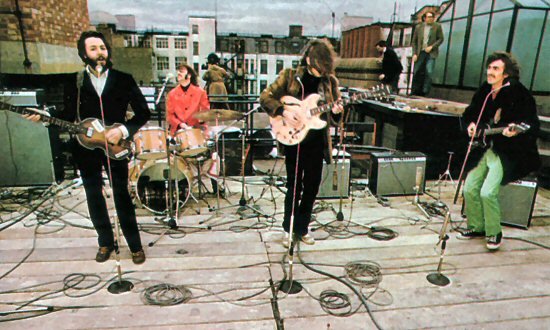


 SeánMcP Blogfeast